Have you ever walked into a beautifully designed home, café, or office and wondered who planned everything so perfectly? From the furniture arrangement and lighting to the colours and materials, an interior designer plays an important role in making a space both attractive and functional.
But what does an interior designer actually do? Is an interior designer's job only about choosing furniture and colours, or does it involve much more?
If you are planning to pursue a career in interior design, understanding the profession's daily responsibilities, required skills, and working process can help you decide whether it is the right career path.
What Does an Interior Designer Do?
An interior designer plans, designs, and improves indoor spaces to make them functional, comfortable, safe, and visually appealing. Their work includes understanding client requirements, planning layouts, selecting materials, designing lighting arrangements, preparing drawings, and coordinating with professionals involved in completing a project.

Interior designers work on residential and commercial spaces, including homes, offices, restaurants, retail stores, and hotels.
For example, when designing a small apartment, an interior designer does more than select furniture. They consider how people move through the rooms, where storage is needed, how natural light enters the space, and which materials suit the client's lifestyle and budget.
The goal is to create an environment that looks good while meeting the practical needs of the people who use it.
What Are the Main Roles and Responsibilities of an Interior Designer?
An interior designer handles several responsibilities throughout a project, from the initial discussion to the final installation.
1. Understanding Client Needs and Requirements
Every interior design project begins with understanding the client.
Designers discuss how the space will be used, the client's lifestyle or business requirements, preferred design styles, expected budget, and project timeline.
For example, a family with young children may need easy-to-maintain surfaces, additional storage, and furniture with safer edges. A restaurant owner may prioritise seating capacity, customer comfort, and a consistent brand experience.
These conversations help the designer develop solutions that fit the client's actual needs.
2. Planning Space and Furniture Layouts
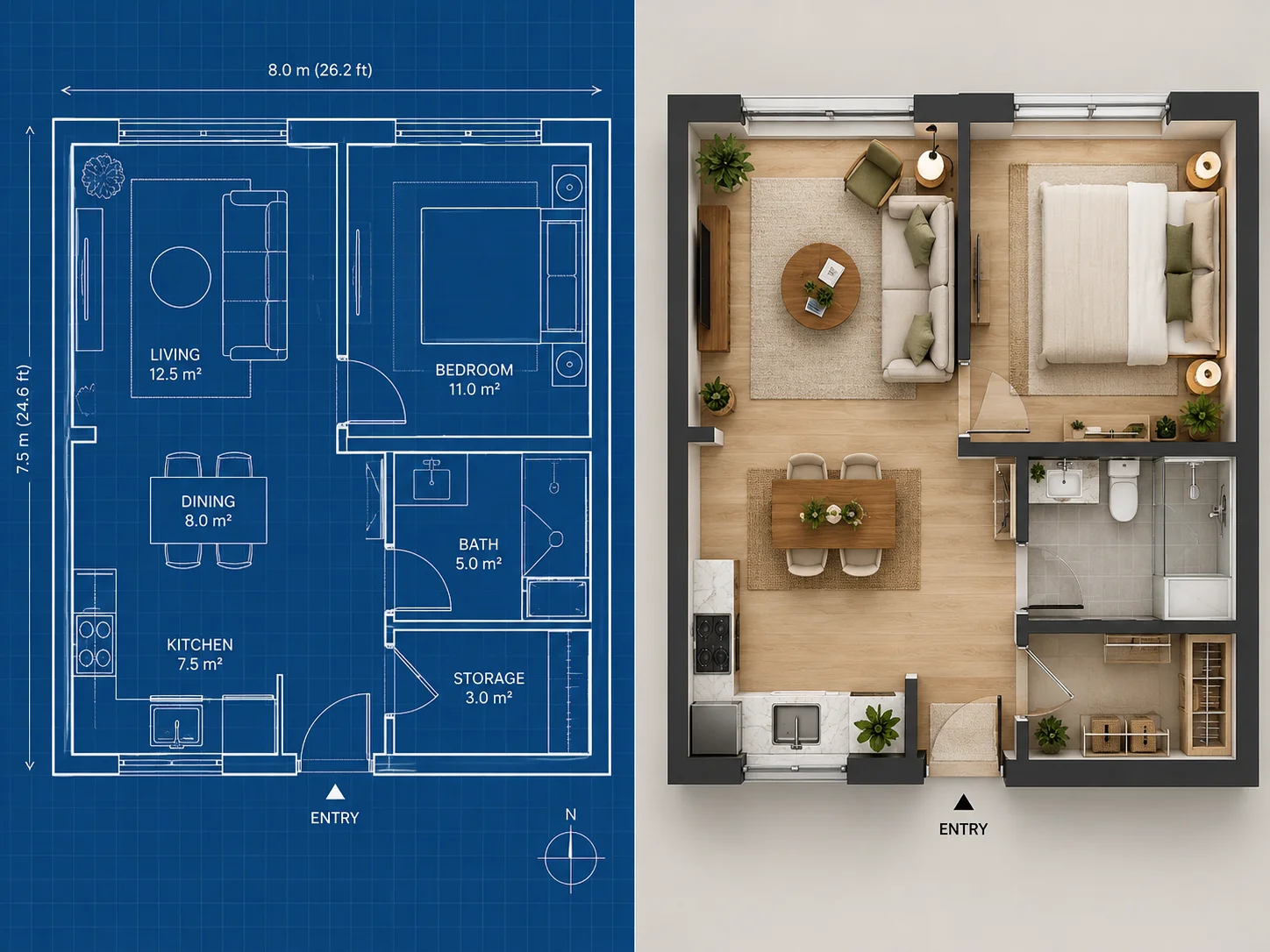
Space planning is one of the most important responsibilities of an interior designer.
Designers determine how different areas of a room should be organised to support comfortable movement and efficient use of available space.
This can involve:
- Planning furniture placement and circulation routes
- Deciding suitable dimensions for different areas
- Identifying storage requirements
- Considering natural lighting and ventilation
- Improving the usability of compact spaces
For example, a well-planned living room provides comfortable seating without blocking walkways or making the space feel overcrowded.
3. Selecting Colours, Materials, and Finishes
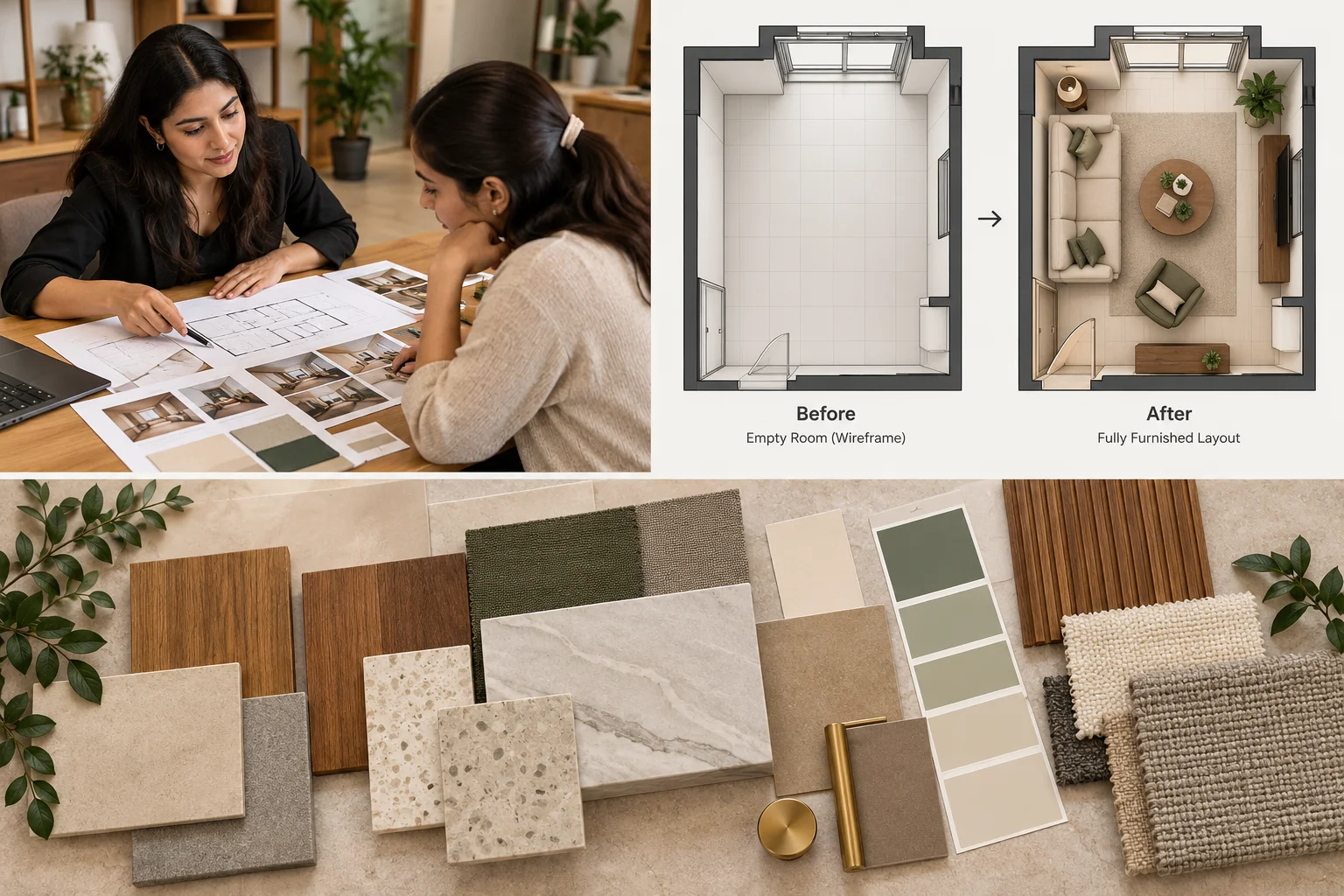
Interior designers choose colours, surface materials, textures, and finishes that support the intended design.
These decisions can include wall finishes, flooring, upholstery, laminates, tiles, and decorative elements.
However, material selection is not only about appearance. Designers also consider durability, maintenance, cost, and suitability for a particular environment.
For instance, flooring suitable for a low-traffic bedroom may not be the best choice for a busy commercial space.
4. Designing Lighting and Ambience
Lighting influences how a space looks, feels, and functions.
Interior designers plan lighting according to the activities performed in different areas.
Common categories include:
- Ambient lighting: Provides general illumination throughout the space.
- Task lighting: Supports activities such as reading, studying, or cooking.
- Accent lighting: Highlights architectural details, artwork, or decorative features.
A kitchen may require bright task lighting over its work surfaces, while a bedroom may benefit from softer lighting that supports relaxation.
Designers also consider natural daylight and coordinate with electrical professionals where necessary.
5. Creating Drawings and 3D Visualisations
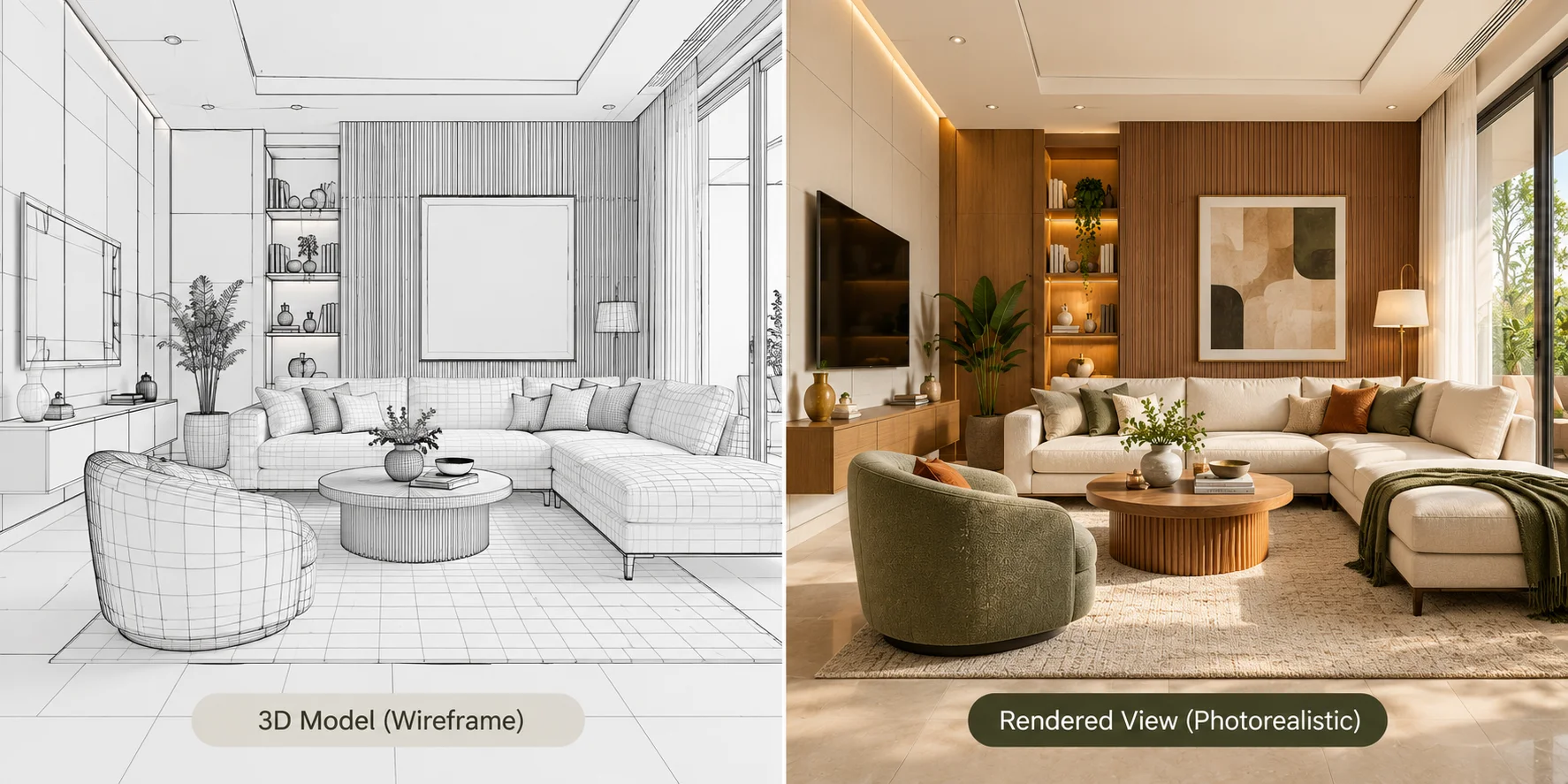
Before work begins on-site, interior designers communicate their ideas through drawings and visual representations.
Depending on the project, these may include floor plans, furniture layouts, elevations, material boards, and three-dimensional models.
Design software helps designers explain their concepts, review proportions, and make changes before execution.
Commonly used tools include AutoCAD, SketchUp, and other 3D modelling or visualisation applications.
The choice of software depends on the project and the designer's responsibilities.
6. Managing Budgets and Material Selections
Interior designers often help clients make informed decisions about how to use their available budget.
This may involve comparing materials, recommending suitable alternatives, obtaining quotations, and prioritising essential design requirements.
For example, if a client has a limited renovation budget, the designer might recommend retaining usable furniture and investing in better lighting, storage, or finishes where improvements will have the greatest impact.
Detailed costing and procurement responsibilities vary depending on the designer's role and project agreement.
7. Coordinating with Contractors and Other Professionals
A design must be translated into a finished space.
Interior designers often coordinate with carpenters, electricians, plumbers, vendors, architects, and contractors during the implementation stage.
They may visit the project site, clarify drawings, review materials, and identify differences between the approved design and the work being carried out.
Structural changes, building services, and regulated technical work require the involvement and approval of appropriately qualified professionals.
Effective coordination helps ensure that the completed project reflects the agreed design.
What Does an Interior Designer Do Daily?
An interior designer's daily routine depends on the type of project and their stage of work.
Some days are spent developing layouts or selecting materials, while others involve client presentations, vendor meetings, and site visits.
Here is an illustrative day in the life of an interior designer:
This is only an example. A junior designer in a studio may spend more time working on drawings, while a self-employed interior designer may also handle client acquisition, proposals, and business administration.
What Skills Does an Interior Designer Need?
A successful interior designer needs a combination of creative, technical, and interpersonal skills.
Essential Technical Skills
Space Planning: Understanding how to organise rooms and furniture to improve functionality and movement.
Technical Drawing: Reading and preparing plans, elevations, and design details that communicate the intended design accurately.
Design Software: Using tools such as AutoCAD and SketchUp to create layouts, models, and presentations.
Material Knowledge: Understanding the properties, applications, maintenance, and limitations of commonly used interior materials.
Lighting Fundamentals: Planning appropriate lighting for different activities and environments.
Basic Construction Knowledge: Understanding how interior elements are installed and how design decisions interact with building systems.
Essential Soft Skills
Creativity and Problem-Solving: Finding practical solutions when space, budget, or project requirements create limitations.
Communication: Explaining concepts clearly and understanding client feedback.
Attention to Detail: Considering measurements, finishes, proportions, and consistency.
Time Management: Organising tasks and coordinating deadlines across project stages.
Collaboration: Working effectively with clients, vendors, contractors, and other design professionals.
Adaptability: Adjusting plans when site conditions, material availability, or client requirements change.
While creativity is important, professional interior design also requires planning, technical knowledge, and the ability to turn ideas into workable solutions.
What Types of Projects Do Interior Designers Work On?
Interior designers can work across several types of spaces, each with different requirements.
For example, designing a retail store requires an understanding of customer movement and product visibility. A residential project, on the other hand, often focuses more heavily on individual preferences, storage, and everyday comfort.
What Is the Difference Between an Interior Designer and an Interior Decorator?
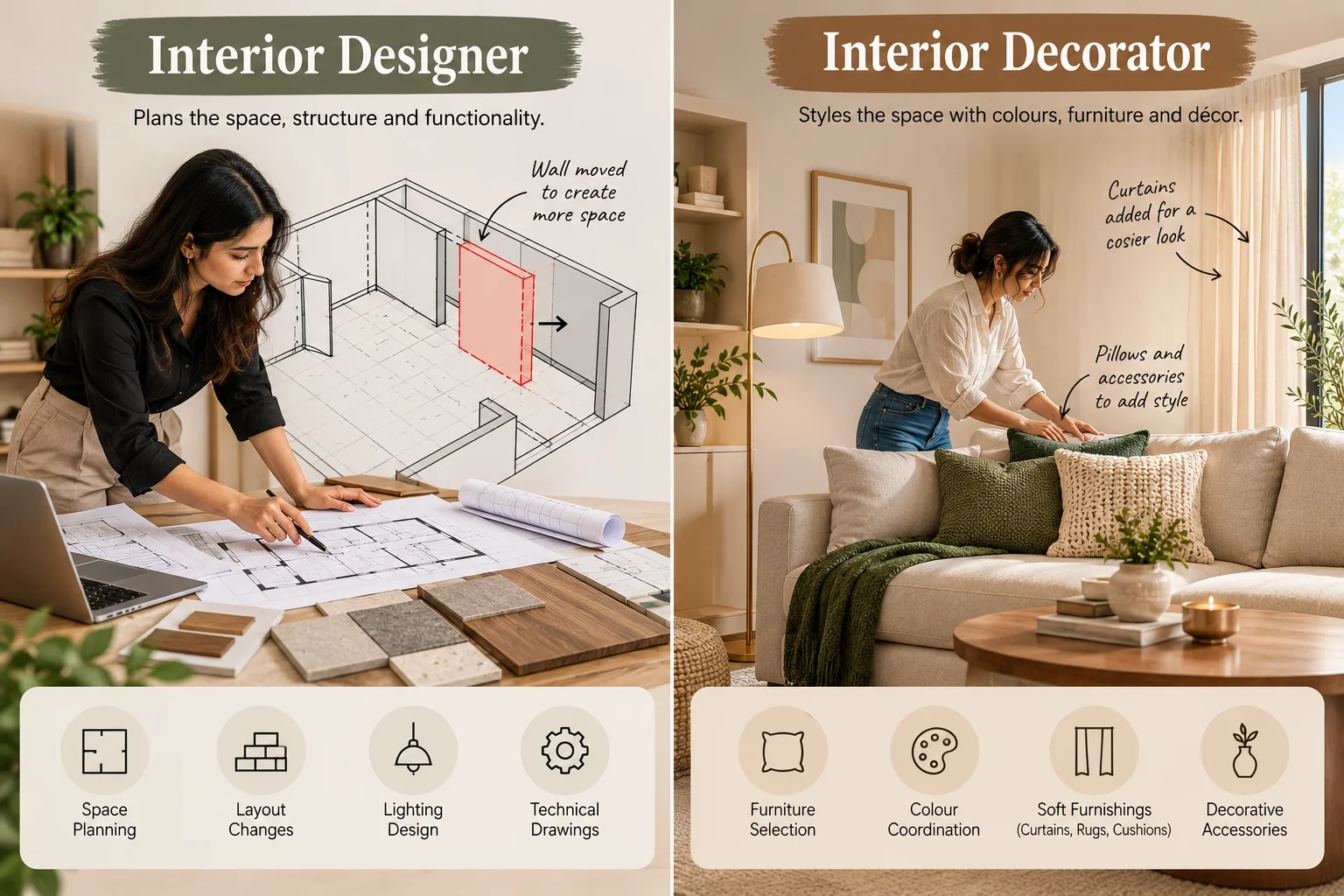
Interior designers and interior decorators both help improve indoor spaces, but their typical responsibilities differ.
For example, deciding how to reorganise a kitchen layout is generally an interior design task, whereas selecting curtains, cushions, and decorative accessories for an existing room is typically an interior decoration task.
The roles can overlap, and professional responsibilities vary by project, qualifications, and local regulations.
How Does an Interior Design Project Work From Start to Finish?
An interior design project generally follows a series of stages.
Step 1: Client Consultation
The designer discusses the client's requirements, intended use of the space, budget, and timeline.
Step 2: Site Assessment
The designer studies the existing space, records measurements, and identifies relevant site conditions or constraints.
Step 3: Concept Development
Initial ideas are developed using reference images, mood boards, colour palettes, and preliminary layouts.
Step 4: Design Development
The selected concept is refined into more detailed plans, material selections, lighting ideas, and visualisations.
Step 5: Documentation and Approvals
The designer prepares the necessary drawings, specifications, and supporting information for project execution. Required approvals are obtained through the appropriate parties.
Step 6: Implementation and Coordination
Contractors and vendors carry out the work while the designer coordinates and reviews relevant aspects of execution, according to the agreed project scope.
Step 7: Final Review and Handover
The completed space is reviewed, remaining issues are identified, and the project is handed over to the client.
Not every project requires the same process. A small room makeover may involve fewer steps than a complete commercial interior project.
How Can You Become an Interior Designer After 12th?
Students who want to become interior designers after Class 12 can begin by developing foundational design knowledge and practical skills.
A structured learning pathway can include the following steps.
Step 1: Explore the Profession
Learn about residential and commercial design, spatial planning, materials, and the types of work interior designers perform.
Step 2: Choose an Interior Design Course
Depending on eligibility, interests, and career goals, students can explore certificate, diploma, or degree programmes in interior design.
Compare course curricula, practical projects, faculty experience, software training, and portfolio-development opportunities before enrolling.
Step 3: Learn Design Fundamentals
Begin with space planning, colour theory, drawing, materials, lighting, and design principles.
Step 4: Develop Software Skills
Practise creating floor plans, three-dimensional models, and visual presentations using relevant design tools.
Step 5: Build a Portfolio
A portfolio should demonstrate how you approach design problems, not just display attractive final images.
Include concept boards, sketches, floor plans, material selections, and completed academic or practical projects.
Step 6: Gain Practical Experience
Internships, site exposure, studio assignments, and supervised projects can help students understand how professional interior design work is carried out.
To explore a structured learning pathway, read more about the Interior Design Courses at Amor Design Institute.
Is Interior Design a Good Career in India?
Interior design can be a rewarding career for people who enjoy combining creativity with practical problem-solving.
Designers can pursue opportunities in residential design studios, architecture and interior firms, commercial design consultancies, furniture businesses, and related fields.
With suitable skills and experience, professionals may work towards roles such as:
- Junior Interior Designer
- Residential Interior Designer
- Commercial Interior Designer
- 3D Visualiser
- Interior Design Project Coordinator
- Design Consultant
- Independent Interior Designer
Career progression depends on factors such as portfolio quality, technical skills, practical experience, project exposure, and the ability to work with clients.
An interior design qualification can provide a foundation, but developing professional competence requires ongoing practice and learning.
Frequently Asked Questions About Interior Designers
1. What is the main job of an interior designer?
The main job of an interior designer is to plan and improve indoor spaces so they are functional, comfortable, and visually appealing. This includes understanding client needs, preparing layouts, selecting materials, and coordinating design implementation.
2. Does an interior designer only decorate rooms?
No. Interior design involves much more than decoration. Designers may work on space planning, lighting, furniture layouts, technical drawings, material specifications, and project coordination. Decoration is only one part of the overall process.
3. Do interior designers need drawing skills?
Basic drawing and sketching skills are useful for communicating ideas. However, students can develop these skills through practice and training. Digital design tools also help designers prepare accurate drawings and visualisations.
4. What software should an interior design student learn?
AutoCAD and SketchUp are commonly used tools for drafting and 3D modelling. Other software may be useful for rendering, presentations, and project documentation. Students should prioritise learning design fundamentals alongside software skills.
5. Can I become an interior designer after Class 12?
Yes. Students can explore interior design education after Class 12 through suitable diploma, degree, or other training programmes. Eligibility and admission requirements depend on the institution and qualification.
6. Do interior designers visit construction sites?
Yes, site visits are a common part of many interior design roles. Designers may visit sites to take measurements, review progress, clarify details, and coordinate with the professionals executing the project.
7. What is the most important skill for an interior designer?
Space planning and problem-solving are particularly important because interior design must balance appearance with functionality. Communication, technical knowledge, creativity, and attention to detail are also essential.
Conclusion
An interior designer does much more than choose furniture or decorate rooms. The profession combines creative thinking, space planning, technical drawing, material knowledge, client communication, and project coordination.
For students considering this career, understanding what interior designers actually do is an important first step. Exploring practical design projects, learning essential software, and developing a strong portfolio can help build the foundation for professional growth.
Interested in turning your creativity into a career in interior design?
Explore the Interior Design Courses at Amor Design Institute to learn more about course options and how you can begin developing your design skills.