You have decided to learn fashion designing, but now you're facing another question: Should you choose a 6-month, 1-year, or 2-year fashion design course?
A 6-month course sounds appealing because you can finish quickly and spend less time studying. A 1-year programme offers more learning time without a long commitment. And a 2-year diploma sounds like a better option if you want to make fashion designing your career.
But does studying for two years automatically make you a better designer? Is a 6-month fashion designing course enough to start working? And is spending an extra year actually worth it?
The answer depends on what you want to achieve.
- 6-month course: Generally suitable for beginners who want to explore fashion design or develop foundational skills.
- 1-year course: Worth considering if you want to develop practical skills, create garments, and build an initial portfolio.
- 2-year course: Usually more appropriate if you want deeper technical training, additional projects, and structured preparation for professional fashion work.
However, course duration alone doesn't tell you how much you will learn.
The curriculum, practical assignments, quality of instruction, and qualification awarded matter just as much.
This guide will help you compare all three options and decide which fashion design course matches your career goals, budget, and available time.
6-Month vs 1-Year vs 2-Year Fashion Design Courses: Quick Comparison
Before exploring each option, here's how these course durations generally compare.
Important: This is a general comparison. A demanding 6-month programme can offer more practical learning than a poorly structured 1-year course.
Similarly, a 2-year course is valuable only when the additional time includes meaningful skills, assignments, feedback, and industry-relevant learning.
What Will You Learn in a 6-Month Fashion Designing Course?
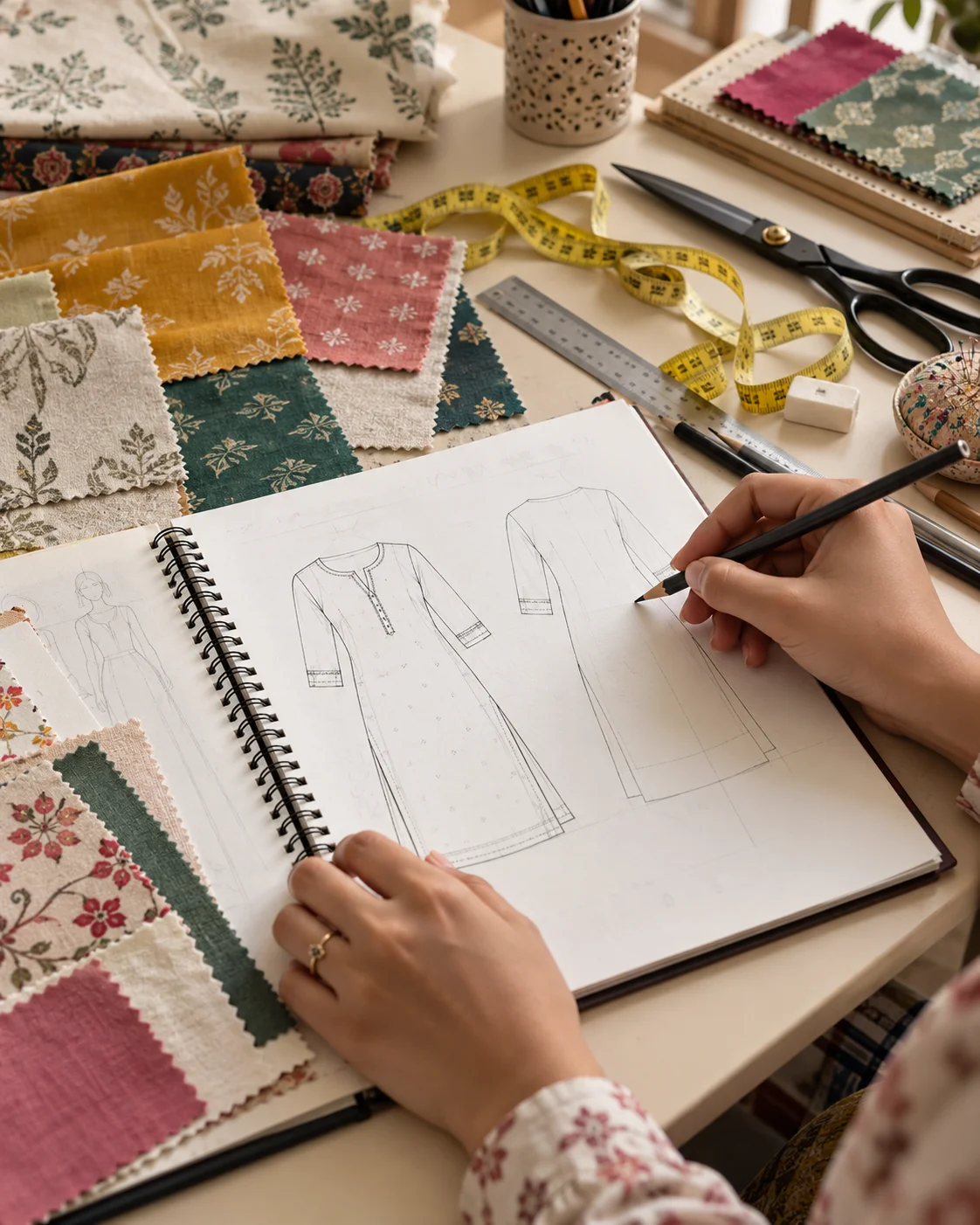
A 6-month fashion design course is generally best for learning the basics and deciding whether you want to pursue fashion designing more seriously.
It can be a useful starting point if you have never studied fashion design, cannot draw confidently, or have limited time.
What Does a 6-Month Course Usually Cover?
A beginner-level fashion designing course may introduce you to:
- Elements and principles of fashion design
- Colour theory and colour combinations
- Basic fashion sketching and illustration
- Fabrics and textile fundamentals
- Basic pattern making
- Introduction to garment construction
- Simple design projects
For example, imagine you want to create your first kurti.
You might begin by sketching its shape, choosing a suitable fabric, taking basic measurements, developing a simple pattern, and understanding how the garment is stitched.
The purpose is to introduce you to the complete process rather than master every technique immediately.
Who Should Consider a 6-Month Fashion Design Course?
A short course may suit you if:
- You have completed Class 10 or 12 and want to explore fashion designing.
- You are unsure whether fashion designing is the right career.
- You want to learn basic designing skills for personal use.
- You are interested in designing clothes for yourself or your family.
- You have limited time because of college, work, or other responsibilities.
Is a 6-Month Fashion Designing Course Enough to Get a Job?
A 6-month course can help you develop entry-level skills, but completing it does not automatically make you job-ready.
Some employers may consider candidates for trainee or assistant-level work based on their practical abilities and portfolio.
However, a short course may not provide enough time to develop advanced pattern-making, fitting, garment production, or collection-development skills.
If your goal is to work as an independent fashion designer or manage complex garment projects, you may need additional training and experience.
Choose a 6-month course if you want to build a foundation without making a long commitment immediately.
What Will You Learn in a 1-Year Fashion Design Course?
A 1-year fashion design course is often a suitable middle option for students who want more practical learning than a short certificate but cannot commit to two years.
The additional learning time may allow you to practise different design techniques, complete more garments, and begin developing a portfolio.
What Does a 1-Year Fashion Design Course Usually Include?
Depending on the institute, a 1-year programme may build on basic subjects and introduce:
- Fashion illustration techniques
- Intermediate pattern making
- Garment construction
- Fabric selection and surface ornamentation
- Fashion styling
- Digital design tools
- Portfolio preparation
- Practical garment-making projects
At this stage, the focus should gradually shift from understanding fashion design to applying what you have learned.
Example: Designing Your First Clothing Collection
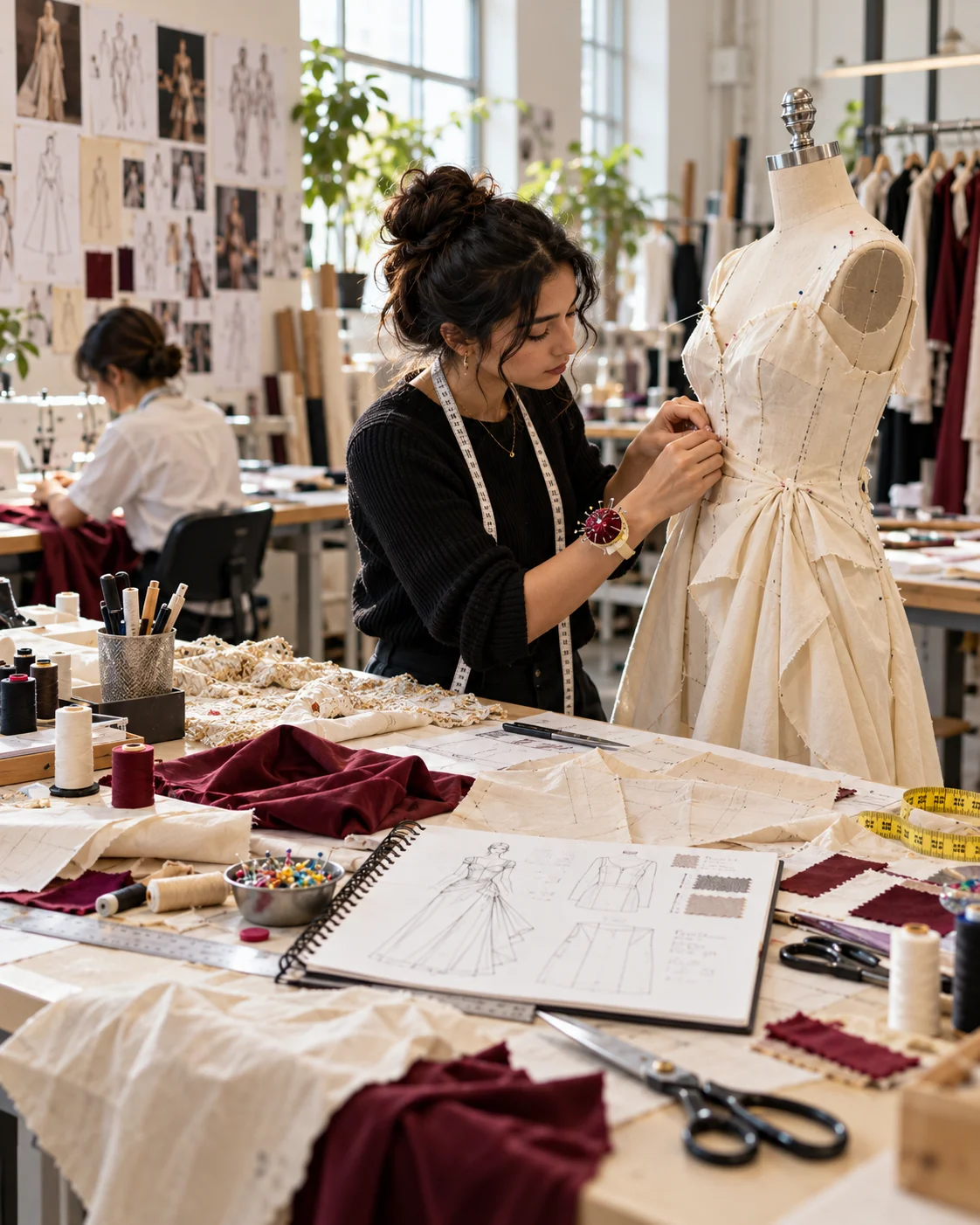
Suppose you want to create three outfits inspired by traditional Gujarati textiles.
You could start by researching colours and motifs, developing sketches, selecting appropriate fabrics, making patterns, and constructing garments.
You would also need to consider whether each outfit is comfortable, wearable, and suitable for its intended customer.
A well-structured 1-year course may give you opportunities to practise several stages of this process.
However, confirm whether collection development is actually part of the programme you are considering.
Who Should Choose a 1-Year Fashion Design Course?
A 1-year course may suit you if:
- You are serious about learning practical fashion design skills.
- You want to understand garment-making beyond the basics.
- You are considering starting a small boutique or custom clothing service.
- You want to develop an initial portfolio.
- You cannot currently commit to a longer programme.
Can You Start a Boutique After a 1-Year Fashion Design Course?
Yes, you can explore starting a boutique after a 1-year course, but your readiness depends on your actual skills rather than the certificate alone.
Running a boutique involves more than designing attractive outfits.
You may need to manage customer measurements, fabric sourcing, fittings, tailoring, costing, production deadlines, and customer expectations.
For example, if a customer orders a custom blouse, you must understand how to translate the design into a garment that fits correctly.
If your course has not given you sufficient construction experience, working with an experienced tailor or undertaking additional practical training may be necessary.
A 1-year course can be a starting point, but it should not be treated as a guarantee that you can immediately manage every aspect of a clothing business.
What Will You Learn in a 2-Year Fashion Design Course?
A 2-year fashion design course generally offers more time for advanced technical learning, design experimentation, portfolio development, and professional preparation.
This can make it a more appropriate option for students who are confident about pursuing fashion design as a career.
However, the extra year should offer clear academic and practical value.
What Does a 2-Year Fashion Design Programme Usually Cover?
Depending on the programme, advanced learning may include:
- Advanced fashion illustration
- Pattern making and garment construction
- Draping and garment development
- Textile techniques and surface ornamentation
- Fashion styling and photography
- Introduction to marketing and fashion business
- Advanced garment-making projects
- Portfolio development
- Internships or industry exposure
Not every 2-year course includes all these subjects, so always review the actual syllabus.
Why Does the Additional Year Matter?
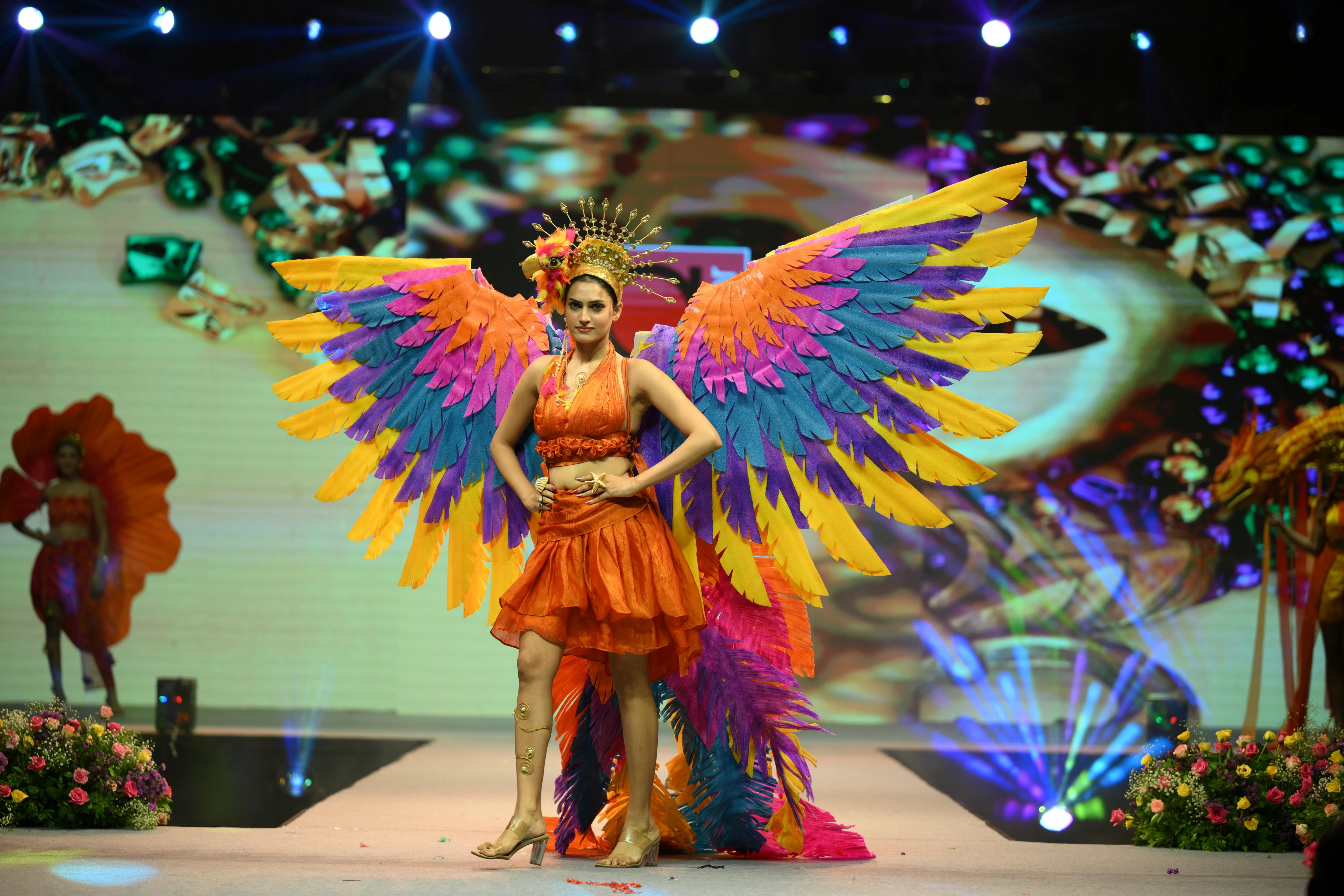
Consider the difference between making one garment and developing a coordinated set of garments.
To create a complete collection, you may need to:
- Research a theme and identify the intended customer.
- Develop multiple design concepts.
- Choose fabrics that suit the designs.
- Prepare patterns and garment components.
- Construct and fit the outfits.
- Make corrections after reviewing the finished garments.
- Present the collection through photographs, illustrations, or a portfolio.
Each stage requires practice.
A longer programme may allow more time for experimentation, mistakes, corrections, and increasingly complex assignments.
That experience can be valuable when preparing to work on professional projects.
Who Should Choose a 2-Year Fashion Design Course?
A 2-year course may be suitable if:
- You want to pursue fashion design professionally.
- You are interested in developing clothing collections.
- You want stronger technical knowledge of garment construction.
- You want to build a more comprehensive portfolio.
- You are interested in internships or supervised projects.
- You plan to explore fashion design, styling, production, or entrepreneurship after training.
Does a 2-Year Fashion Design Course Guarantee Better Career Opportunities?
No. A longer course can give you more time to develop skills, but it does not guarantee employment or a higher salary.
Employers may evaluate your technical skills, portfolio, garment-making abilities, communication, and relevant experience.
A student who practises consistently during a shorter course may develop stronger skills than someone who completes a longer programme without engaging seriously with assignments.
The additional training time matters when you use it effectively.
Which Fashion Design Course Should You Choose After Class 12?
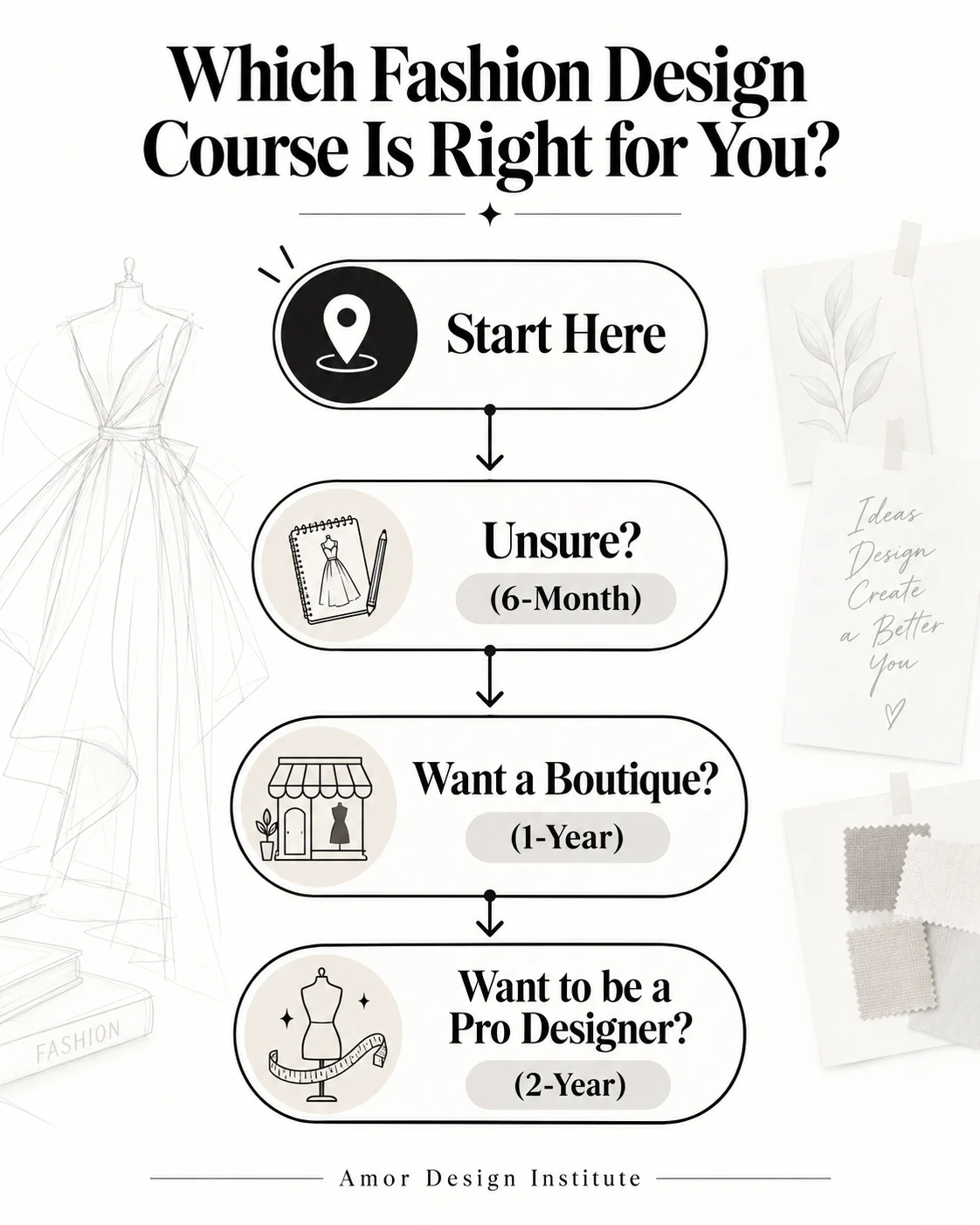
If you have just completed Class 12, your decision should depend on how certain you are about fashion designing and what you want to do after the course.
Let's consider three realistic situations.
Scenario 1: You Like Fashion but Are Unsure About Making It Your Career
You have completed Class 12 Commerce.
You enjoy styling outfits and experimenting with different clothing combinations, but you have never studied fashion sketching or stitching.
You are interested in fashion designing, although you are not sure whether you will enjoy the technical subjects.
Consider: A 6-month beginner-level course.
It may help you understand fabrics, sketching, garment design, and practical construction before committing to longer training.
Ask whether you can pursue further study later and whether any completed modules will be recognised.
Scenario 2: You Want to Start a Small Boutique
You have completed Class 12 and want to create customised ethnic wear.
Your immediate goal is to learn garment design, understand customer measurements, and develop practical skills without spending several years in education.
Consider: A practical 1-year fashion design course.
Look for substantial instruction in pattern making, stitching, fabric selection, fitting, and garment projects.
You should also explore basic costing and customer management, even if these are not part of the course.
If the 1-year syllabus is too introductory for your goals, additional training or a longer programme may be a better choice.
Scenario 3: You Want to Become a Professional Fashion Designer
You have completed Class 12 and want to work with fashion labels or eventually develop your own clothing collections.
You are prepared to invest more time in building technical skills and a professional portfolio.
Consider: A comprehensive 2-year diploma programme or an appropriate degree programme.
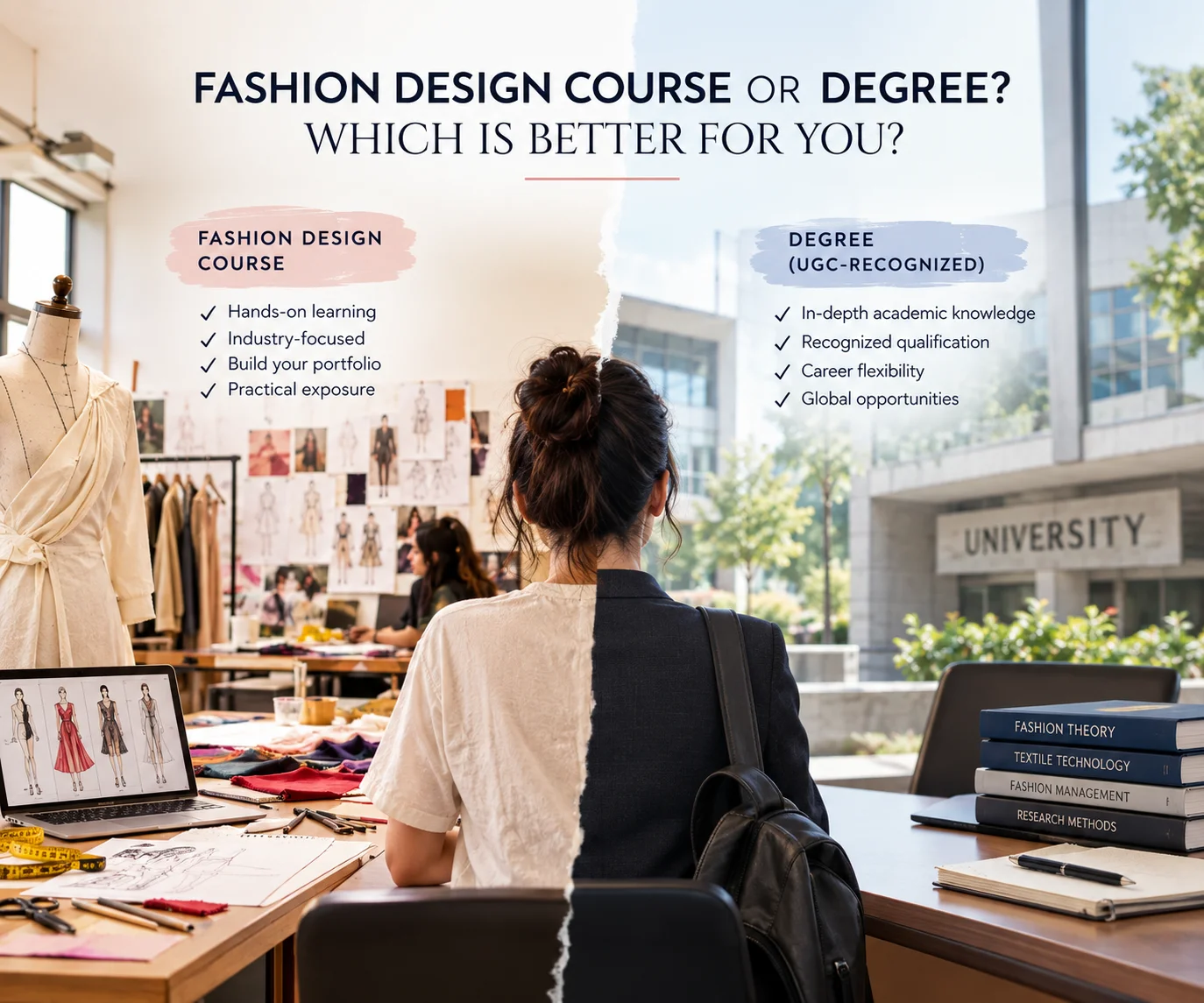
A 2-year course may offer more practical learning time, while a recognised university degree may be important for certain higher-study or career pathways.
Do not assume the two qualifications are interchangeable.
Compare the actual curriculum, award, assessment methods, and long-term opportunities before deciding.
Is a 2-Year Fashion Design Course Better Than a 1-Year Course?
A 2-year course may be better if it teaches additional skills you need for your career. It is not automatically better simply because it lasts longer.
When comparing the programmes, look beyond their names.
Suppose an institute offers:
Course A: 1 Year
- Basic fashion illustration
- Pattern making
- Garment construction
- Digital design basics
- Portfolio preparation
Course B: 2 Years
- All foundational subjects
- Advanced pattern making
- Additional construction projects
- Fashion styling
- Industry-related assignments
- Internship opportunities
In this hypothetical comparison, Course B could offer greater value to someone planning a professional design career.
But if Course B mainly repeats introductory subjects, the additional time may not justify the cost.
Ask the institute to show you exactly what students learn in the second year that is not covered in the first.
That is a more useful question than simply asking whether the longer course is better.
How Much Do 6-Month, 1-Year, and 2-Year Fashion Design Courses Cost?
Fashion design course fees vary based on the institute, curriculum, facilities, qualification, and included materials.
Generally, shorter certificate courses require a smaller total investment than longer diploma programmes.
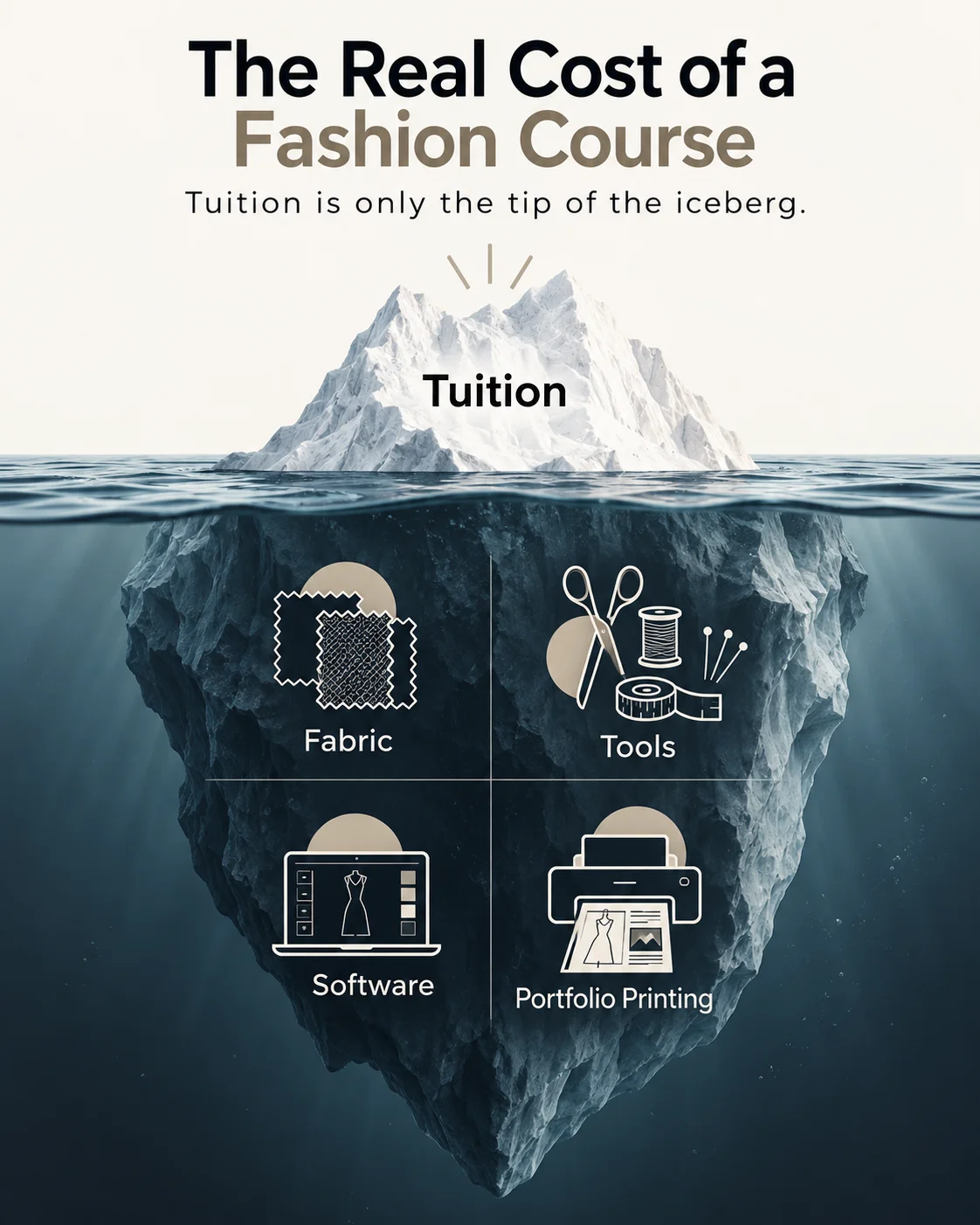
But tuition fees are not the only expenses to consider.
What Should You Include in Your Course Budget?
Questions to Ask Before
Check whether you need to pay separately for:
- Fabric and garment-making materials
- Sewing or pattern-making tools
- Art supplies and stationery
- Software
- Portfolio printing and photography
- Examination and certification fees
- Workshops, visits, or events
- Travel and accommodation
How Should You Compare Course Costs?
Rather than comparing only the advertised fee, calculate:
Total course investment = tuition fees + required materials + additional charges + travel and other necessary expenses
Next, compare that amount with the practical training provided.
For example, a lower-fee course may become more expensive if essential materials and software are charged separately.
Similarly, a longer course may offer more supervised garment-making hours, but you should verify that before deciding it offers better value.
For Ahmedabad-specific fee information, read Fashion Design Courses in Ahmedabad: Fees, Duration & Eligibility (2026 Guide).
The figures in that guide are published estimates. Confirm current fees and inclusions with each institute before paying.
Which Fashion Design Course Is Best for Getting a Job?
There is no single course duration that guarantees employment. For professional entry-level work, the depth of your practical training and the quality of your portfolio are important factors.
Different roles also require different abilities.
A short course may support your introduction to the field.
A longer programme may give you more opportunities to develop the work samples and technical confidence needed for professional roles.
However, some positions require previous experience, a particular qualification, or a specific portfolio standard.
Check actual job descriptions for roles you are interested in before selecting your course.
6 Common Mistakes Students Make When Choosing a Fashion Design Course
1. Choosing the Shortest Course Only to Save Time
Finishing quickly can be attractive, but a short course may not provide the depth you need.
If you want to work professionally, check whether the course includes sufficient construction projects and practical assessments.
2. Assuming a 2-Year Diploma Is Equivalent to a Degree
A 2-year diploma and a university bachelor's degree are different qualifications.
If you plan to pursue postgraduate education or roles requiring a recognised degree, verify the eligibility requirements before enrolling.
3. Comparing Fees Without Comparing Practical Training
Two courses with similar fees may offer very different learning experiences.
Check how many garments students make, how practical assignments are assessed, and what facilities are available.
4. Ignoring the Portfolio
Employers and clients may want to see what you can actually design or produce.
Ask whether you will create documented work such as sketches, technical drawings, patterns, garments, and finished project photographs.
5. Assuming Internship or Placement Support Is Guaranteed
A course may advertise industry visits, internships, or placement assistance.
Ask which services apply to your specific programme and whether opportunities depend on performance, availability, or other conditions.
Placement assistance should never be confused with guaranteed employment.
6. Choosing a Course Without a Clear Career Goal
A student who wants to run a boutique and a student who wants to pursue a formal university degree may need different educational pathways.
Decide what you want the qualification and training to help you achieve.
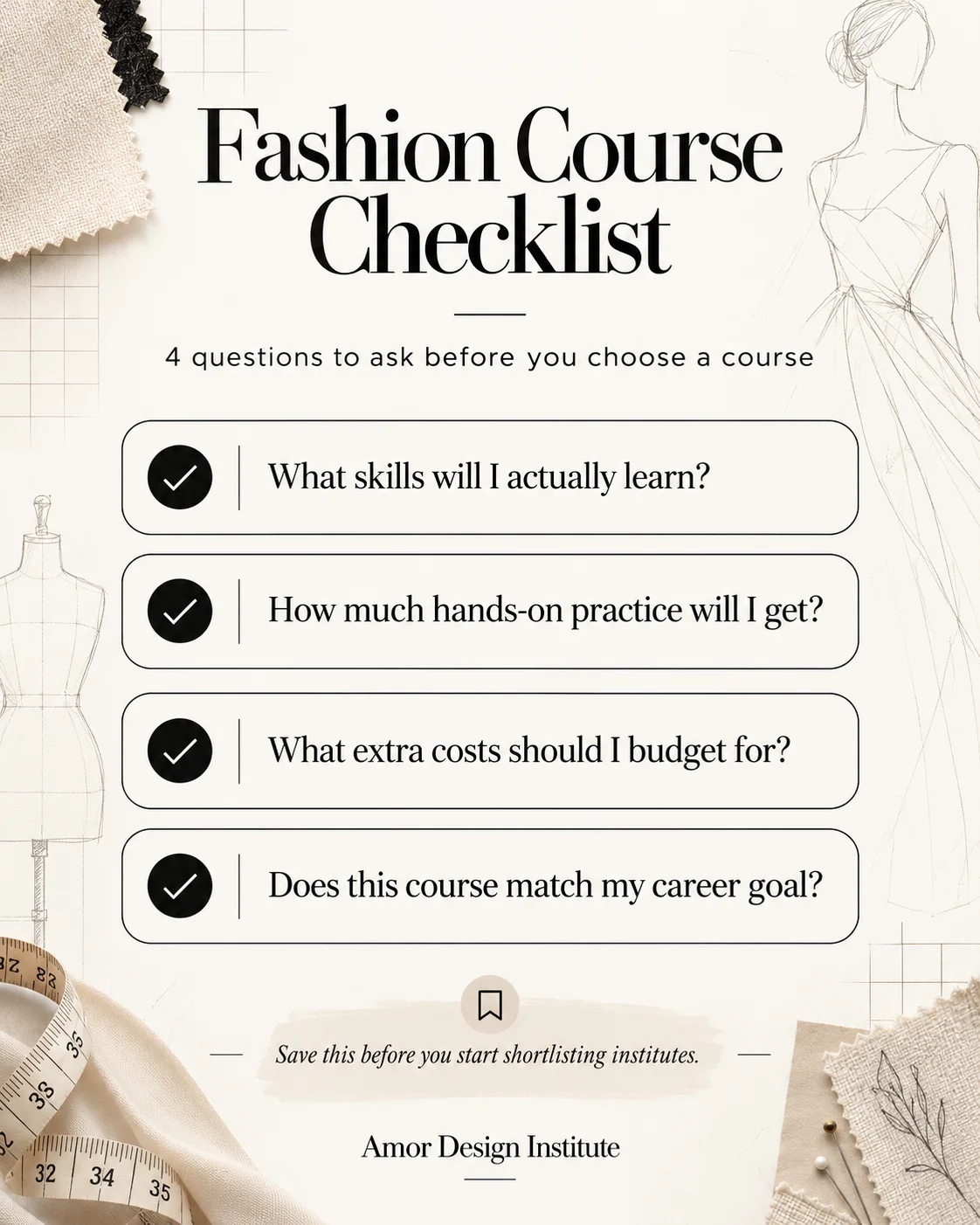
8 Questions to Ask Before Joining a Fashion Design Course
Before enrolling, use this checklist when comparing institutes.
- What qualification will I receive? Is it a certificate, diploma, advanced diploma, or recognised degree?
- What subjects are taught in each semester? Request a detailed, duration-specific syllabus.
- How many practical garments will I make? Ask to see representative student assignments.
- Does the course teach pattern making and stitching? Check how much supervised practice is included.
- What software will I learn? Confirm whether digital tools are included in your chosen duration.
- Will I develop a portfolio? Ask what projects and final submissions are required.
- Are internships, workshops, or industry visits included? Confirm which activities apply to your programme.
- What is the total course cost? Request a written fee breakdown, including materials and additional charges.
You should also ask whether you can move from a shorter course to a longer one, whether completed learning is credited, and what happens if you need to pause your studies.
Do not assume progression is automatic.
What Are the Differences Between Amor Design Institute's 6-Month, 1-Year, and 2-Year Fashion Design Courses?
If you are considering fashion design courses in Ahmedabad, Amor Design Institute offers programmes with different durations and progressively developed curricula.
According to the institute's published fashion design course page, the curriculum is structured across the following stages.
6-Month Fashion Design Course at Amor
The published first-stage curriculum includes:
- Elements and principles of design
- Colour theory
- Basic sketching and design process
- Fabric science
- Elements of fashion
- Surface ornamentation
- Fashion model drawing
- Pattern making and garment construction
- A term garment project
This stage is relevant for students looking to develop foundational creative and garment-making skills.
1-Year Fashion Design Course at Amor
The published curriculum builds on the initial stage with subjects including:
- Fashion illustration
- Accessories and styling
- Further pattern making
- Further garment construction
- Indian costume history and traditional textiles
- Surface ornamentation
- CAD using CorelDRAW
- Portfolio development
- An in-house fashion show
- Visits and workshops
For a student wanting additional garment-making practice, digital design exposure, and portfolio-related learning, the 1-year option may be worth exploring.
2-Year Fashion Design Course at Amor
The published later-stage curriculum includes:
- Western costume history
- Further fashion illustration
- Advanced pattern making and garment construction
- Fashion styling
- Fashion photography
- Basic marketing
- Additional garment projects
- Visits and workshops
- Internship
This may be relevant to students looking for a longer, more comprehensive practical learning pathway.
Amor also publishes information about its annual Amor Glitzz fashion event, through which graduating fashion students showcase collections.
The institute states that placement assistance is available on completion of the internship and 2-year course.
However, students should verify the current assessment requirements, internship arrangements, qualification awarded, and any certification eligibility for their chosen course.
Note: These curriculum descriptions are based on Amor's published course information. Current fees, schedules, specific course awards, and availability should be confirmed directly with the admissions team.
Explore: Fashion Design Courses at Amor Design Institute.
How to Decide Between a 6-Month, 1-Year, and 2-Year Fashion Design Course
Still confused?
Use this decision-making guide.
How to Decide Between a 6-Month, 1-Year, and 2-Year Fashion Design Course
A Simple Three-Step Decision Test
Step 1: Write down your goal.
For example: "I want to learn how to design and construct custom ethnic wear."
Avoid vague goals such as "I want a good career in fashion."
Step 2: Identify the skills you need.
For custom ethnic wear, these might include sketching, Indian textiles, pattern making, garment construction, fitting, and costing.
Step 3: Compare the course outcomes.
Ask each institute to show which programme actually covers these skills and at what level.
Then consider your budget, available time, and qualification requirements.
The course that matches these factors is a better choice than simply picking the longest or cheapest option.
Frequently Asked Questions
1. Is a 6-month fashion designing course enough?
A 6-month course can be enough to learn introductory fashion design skills. It is particularly useful for beginners and people exploring the field. However, advanced garment construction and professional design work may require further study and practice.
2. Is a 1-year fashion design course worth it?
Yes, a well-structured 1-year course can be worthwhile if it includes practical assignments, garment construction, design techniques, and portfolio preparation. Its value depends on the curriculum and how well it supports your goals.
3. Is a 2-year fashion design course better than a 1-year course?
A 2-year programme can offer greater depth and more time for advanced projects. However, it is only a better choice if the additional curriculum supports your career goals and justifies the extra time and investment.
4. Which fashion design course is best after Class 12?
A beginner may consider a 6-month course, someone seeking practical training may explore a 1-year course, and students pursuing more extensive professional preparation may prefer a 2-year diploma or relevant degree. Individual eligibility requirements must be checked.
5. Can I get a job after a 6-month fashion design course?
It is possible to apply for certain trainee or assistant-level opportunities, depending on your skills and employer requirements. However, a 6-month certificate does not guarantee employment, and many roles require additional knowledge or experience.
6. Can I become a fashion designer after completing a 1-year course?
You can begin developing the skills needed for fashion design through a 1-year course. Your readiness to work independently will depend on your ability to develop designs, understand patterns and fabrics, construct garments, and demonstrate your work.
7. What is the difference between a fashion design certificate and a diploma?
A certificate generally recognises completion of a defined programme, while a diploma may represent a broader or more advanced course of study. However, qualifications vary between institutions. Always verify the awarding body, level, and recognition.
8. Can I pursue fashion designing after Class 12 Commerce?
Yes. Many fashion design certificate and diploma programmes accept students from Commerce, Science, and Arts backgrounds. Check the admission criteria of your chosen programme.
9. Does a 2-year fashion design diploma count as a graduation degree?
No, not automatically. A diploma is not the same as a recognised bachelor's degree. If your future plans require a degree, confirm the academic qualification requirements before enrolling.
10. Which course is best for starting a clothing boutique?
A course with strong training in garment construction, pattern making, fabric selection, and fitting can be useful. You will also need practical business skills such as sourcing, costing, production management, and customer service. Choose the duration based on how thoroughly these skills are covered.
Conclusion: Choose the Course That Fits Your Goal, Not Just Your Timeline
There is no universally best duration for a fashion design course.
A 6-month course can help you explore the fundamentals. A 1-year course may allow you to develop practical skills and an initial portfolio. A 2-year course may provide more time for advanced learning and professional preparation.
But the most important question isn't how quickly you can complete the course.
It's whether the programme teaches you what you need to do next.
Before applying, compare the curriculum, practical projects, qualification, total fees, and opportunities for further learning.
If you are considering fashion designing in Ahmedabad, explore Amor Design Institute's fashion design programmes and discuss which duration matches your current skills and career plans.
The right fashion design course isn't necessarily the longest one. It's the one that helps you develop the skills you actually need.