Interior design is no longer just about selecting attractive furniture, matching colours, or creating beautiful rooms. It's increasingly about understanding how people live, what makes them comfortable, and how a space can adapt to their changing needs.
Think about a typical Indian home. The living room might double as a workspace during the day. A bedroom may need additional storage without feeling crowded. A kitchen must be functional enough for everyday cooking while maintaining a modern appearance.
These everyday requirements are influencing how interior spaces are designed.
As we approach 2027, interior design trends in India are moving towards a combination of comfort, sustainability, personalisation, technology, and practical space planning. Rather than following a particular aesthetic simply because it looks fashionable, designers are considering how each decision improves the experience of using a space.
For aspiring interior designers, these developments offer an opportunity to understand how design trends translate into real-world projects.
Let's explore the 12 interior design trends for 2027 that are expected to influence Indian homes and the skills designers need to work with them.
What Are the Biggest Interior Design Trends for 2027 in India?
The biggest interior design trends for 2027 in India include warm minimalism, sustainable materials, multifunctional furniture, integrated smart-home technology, biophilic design, and contemporary interiors featuring Indian craftsmanship. Designers are also exploring organic furniture shapes, layered lighting, textured finishes, practical storage solutions, and wellness-focused spaces. Together, these directions reflect a growing preference for interiors that combine visual appeal with everyday functionality.
Here is a quick overview:
1. Warm Minimalism and Earthy Colours
Minimalism is evolving.
For years, modern interiors were often associated with plain white walls, cool grey furniture, sharp edges, and very few decorative elements.
In 2027, the direction is becoming warmer and more inviting.
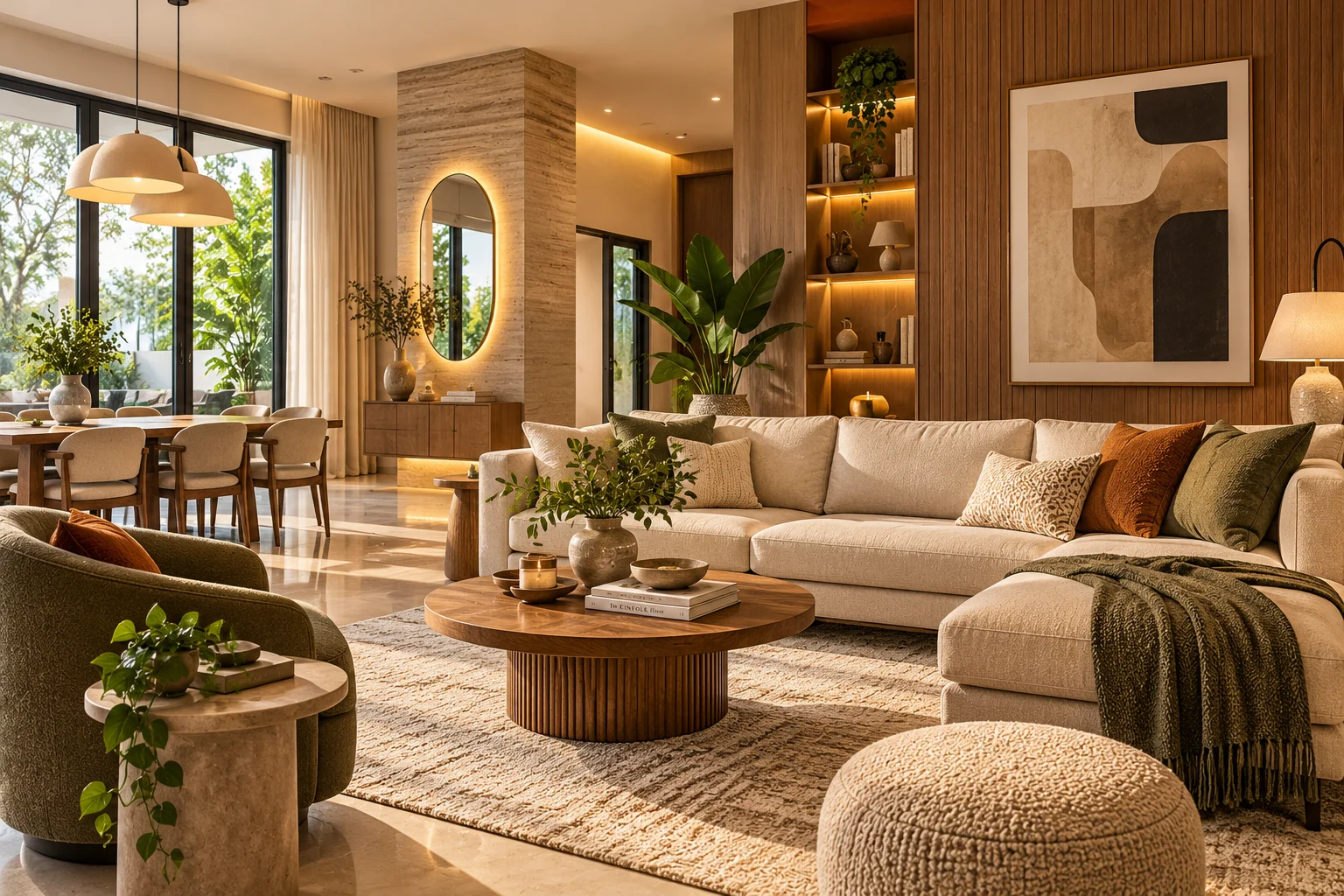
Warm minimalism retains the simplicity of traditional minimalist design but introduces natural textures, comfortable furniture, and colours that make spaces feel welcoming rather than empty.
Which Interior Colours Are Expected to Trend in 2027?
Earthy neutrals, muted greens, terracotta, warm browns, and soft beige tones are expected to remain influential in 2027 interiors. These colours create a calm foundation and work well with natural wood, stone, and textured fabrics. Softer greens are particularly notable, with paint manufacturer AkzoNobel selecting Soulful Sage as its 2027 Colour of the Year.
Popular colour directions include:
- Warm beige and cream: Suitable for relaxed, neutral interiors.
- Terracotta and clay: Add warmth and character to living spaces.
- Sage and olive green: Introduce nature-inspired colour without overwhelming a room.
- Chocolate and walnut brown: Bring depth through furniture and wooden finishes.
- Muted blue: Creates a subtle contrast with warm neutral palettes.
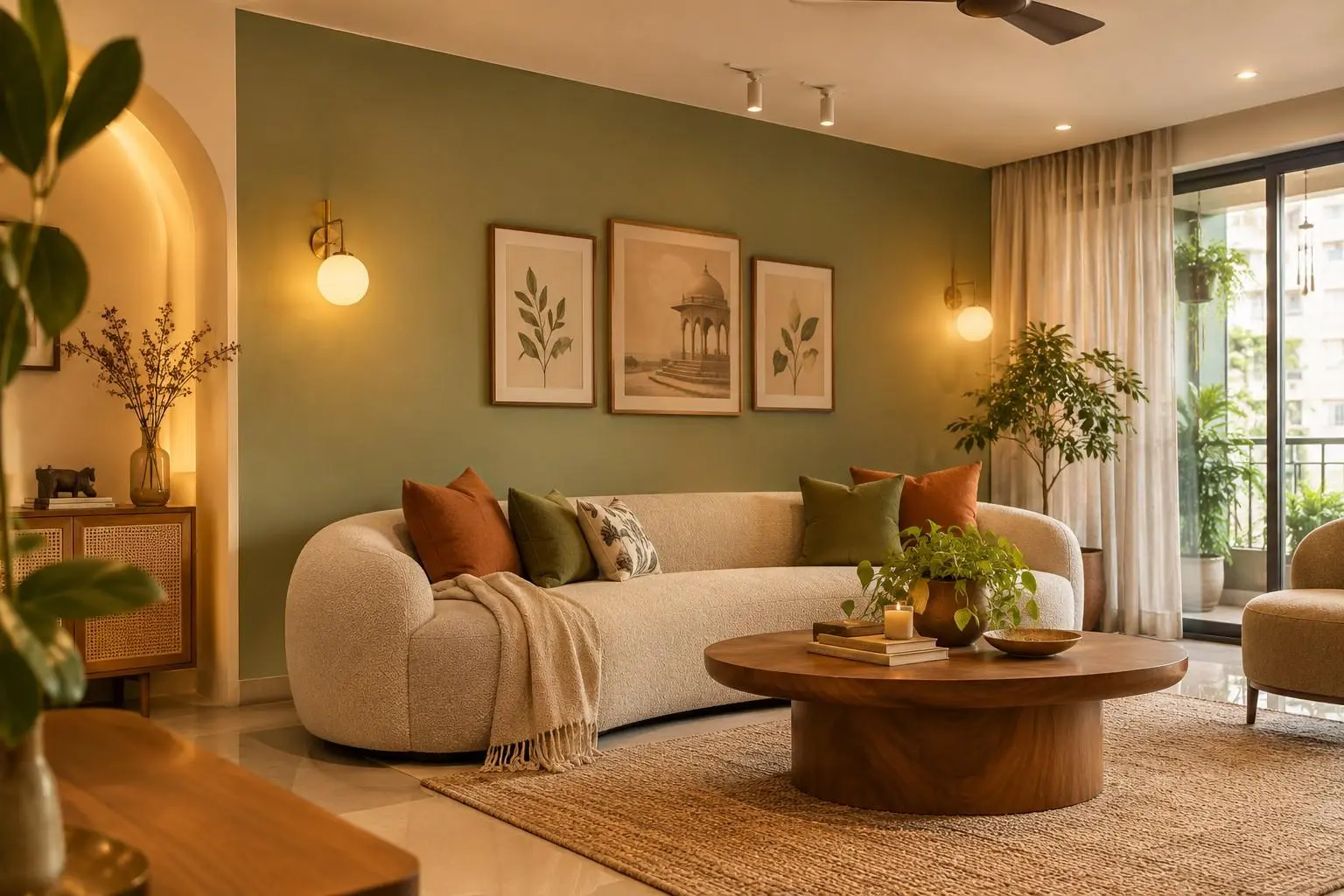
Application in Indian homes: A living room with cream walls, walnut furniture, muted green cushions, and warm lighting can create a contemporary aesthetic without requiring expensive decorative elements.
What interior design students can learn: Colour theory, colour harmony, material coordination, and mood-board development are important for creating cohesive interiors.
2. Sustainable and Eco-Conscious Interior Design
A beautiful interior should not come at the expense of unnecessary material waste.
Sustainable interior design is becoming an important consideration as homeowners and designers pay greater attention to product durability, material sourcing, and long-term environmental impact.
Instead of focusing only on appearance or the initial cost, designers must evaluate how materials are manufactured, maintained, repaired, and eventually replaced.
Which Sustainable Materials Can Be Used in Modern Interiors?
Materials such as responsibly sourced timber, reclaimed wood, bamboo, recycled-content products, and durable natural finishes can support more sustainable interior design. However, sustainability depends on sourcing, processing, lifespan, maintenance, and transportation, not simply whether a material is labelled natural or eco-friendly.
Application in Indian homes: A contemporary dining room could feature a refurbished wooden table, durable upholstered chairs, energy-efficient lighting, and locally sourced decorative objects.
Sustainable design doesn't always require replacing existing furniture. Sometimes, retaining and repairing good-quality pieces is the more responsible decision.
What interior design students can learn: Material research, product specification, lifecycle thinking, and balancing environmental goals with project budgets.
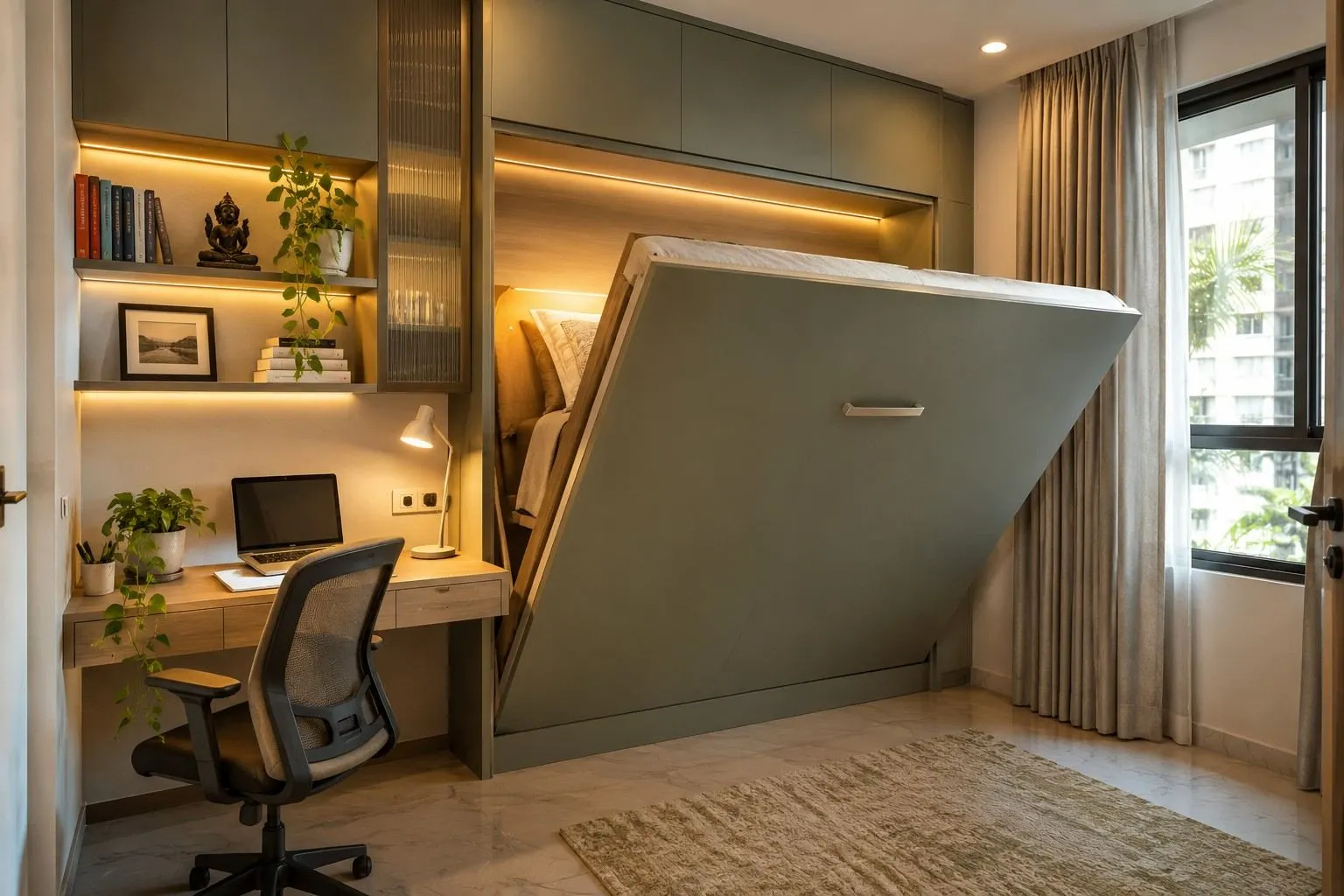
3. Multifunctional Spaces and Space-Saving Furniture
Functional modular kitchen design for Indian homes featuring matte green and wood cabinets, intelligent pantry pull-outs, and corner storage solutions.
Not every home has a separate room for working, studying, exercising, and entertaining guests.
This is particularly relevant in urban apartments where each square foot needs to serve a purpose.
Multifunctional interior design focuses on making a single space suitable for more than one activity without compromising comfort or movement.
Furniture selection and floor planning become especially important.
Examples include:
- Foldable study desks that can be closed after work.
- Sofa-cum-beds for occasional guests.
- Storage beds with integrated compartments.
- Sliding partitions that separate spaces when needed.
- Wall-mounted shelves that preserve floor space.
- Modular furniture that can be rearranged as requirements change.
How Can Interior Designers Make Small Indian Homes More Functional?
Interior designers can improve small homes by planning circulation routes, selecting appropriately sized furniture, using vertical storage, and creating flexible activity zones. A successful layout considers how residents move through the space and use it throughout the day rather than simply trying to fit more furniture into a smaller area.
Practical example: In a compact 2BHK apartment, a designer could turn a secondary bedroom into a study and occasional guest room using a foldable bed, built-in storage, and a compact workstation.
What interior design students can learn: Space planning, ergonomics, accurate measurements, furniture layouts, and software-based floor-plan development.
4. Smart Homes and Seamlessly Integrated Technology
Technology is becoming a more natural part of interior spaces.
However, smart-home design isn't just about installing expensive gadgets. It involves understanding how technology can improve everyday convenience and how the required systems fit into an interior layout.
Rather than exposing multiple switches, cables, and devices, designers are exploring ways to integrate controls and technology discreetly.
Smart-home applications include automated lighting, motorised curtains, occupancy-based controls, integrated entertainment systems, and connected temperature management.
For example, a living room might have different lighting settings for reading, working, and watching television.
The same room can support multiple activities through carefully planned lighting and controls.
Application in Indian homes: Designers can plan charging points, network connections, lighting circuits, and concealed wiring before finalising furniture, wall finishes, and false ceilings.
Technology should also be practical. Maintenance requirements, internet reliability, manual controls, compatibility, and the homeowner's budget must be considered.
What interior design students can learn: Electrical layout basics, lighting coordination, technical drawings, and working with home-automation specialists.
5. Biophilic Design and Nature-Inspired Interiors
Biophilic design is about strengthening the connection between people and nature within built environments.
While indoor plants are a familiar part of home decoration, biophilic design goes much further.
It considers natural light, ventilation, outdoor views, materials, patterns, and the sensory experience of a space.
How Can Biophilic Design Be Applied to Indian Homes?
Biophilic design can be introduced through appropriate indoor plants, access to daylight, natural textures, views of greenery, and better connections between interior and outdoor spaces. In India, designers must also consider temperature, humidity, dust, monsoon conditions, and the maintenance requirements of living elements.
Practical applications include positioning a reading corner near a window, using plant-friendly balcony layouts, introducing natural textures, and planning ventilation alongside privacy.
A bedroom does not necessarily need a large indoor garden to feel connected to nature. A thoughtfully placed window, soft daylight, natural materials, and a restrained colour palette can make a meaningful difference.
What interior design students can learn: Daylight planning, environmental comfort, material selection, and climate-responsive design.
6. Indian Craftsmanship in Contemporary Interiors
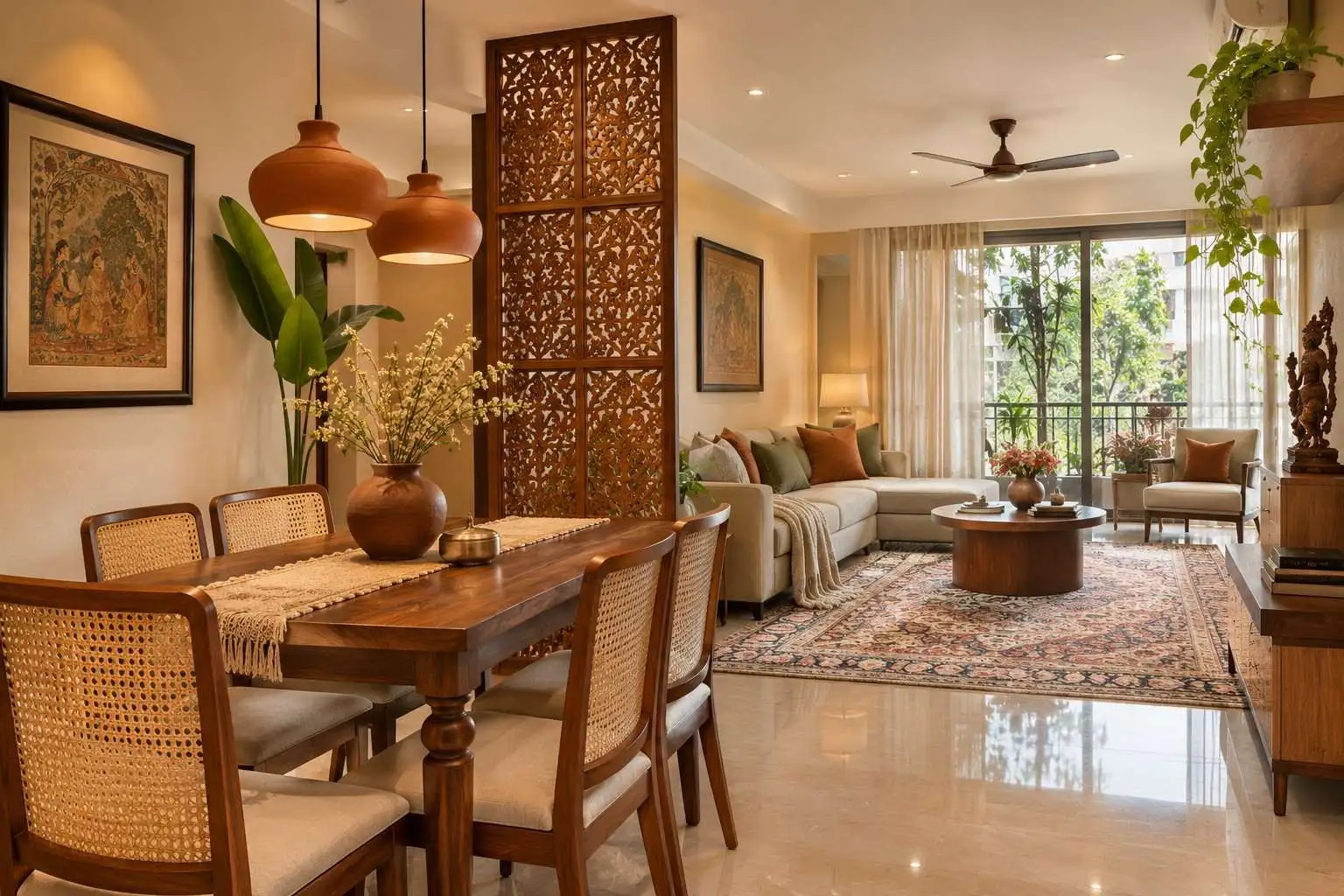
Warm Minimalism and Earthy Colours
Contemporary Indian open-plan living and dining space integrating traditional craftsmanship with a carved wooden divider, cane dining chairs, and terracotta pendant lights.
One of the most interesting directions in Indian interior design is the integration of traditional craftsmanship with contemporary aesthetics.
India has a rich history of furniture-making, textiles, pottery, stonework, weaving, and regional decorative traditions.
Instead of using these elements only in traditional interiors, designers are exploring how they can become part of modern spaces.
A handwoven rug can complement minimalist furniture. Cane detailing can add texture to a modern cabinet. Handcrafted ceramic objects can become focal points in an otherwise simple room.
Some examples include:
- Cane and rattan furniture.
- Handloom cushions and upholstery.
- Traditional textile patterns used in contemporary settings.
- Handcrafted ceramic lighting and accessories.
- Regional stone and wood craftsmanship.
- Decorative pieces inspired by local artistic traditions.
Application in Indian homes: A modern Ahmedabad apartment might combine clean-lined contemporary furniture with locally crafted wooden details, traditional textiles, and a carefully selected handmade artwork.
The goal is not to fill a room with traditional objects. It is to create a meaningful relationship between heritage and modern living.
What interior design students can learn: Design history, cultural awareness, material research, artisan collaboration, and responsible interpretation of regional design.
7. Curved Furniture and Organic Shapes
Straight lines and rectangular furniture will always have a place in interior design.
However, softer shapes are becoming an increasingly visible feature of contemporary interiors.
Curved sofas, rounded coffee tables, arched details, and sculptural seating can introduce movement into a room.
These forms can make a space feel more relaxed, especially when combined with warm materials and comfortable fabrics.
Where Do Curved Furniture Designs Work Best?
Curved furniture works particularly well in living rooms, lounges, bedrooms, and hospitality spaces where it can soften the overall layout. However, dimensions and circulation are important. A large curved sofa may look attractive in a spacious room but could create unnecessary dead space in a compact apartment.
Designers should consider:
- The dimensions of the room.
- Furniture placement and circulation.
- Proportion and visual balance.
- Upholstery durability.
- Cleaning and maintenance.
- Whether custom furniture is necessary.
What interior design students can learn: Furniture design, form development, proportion, ergonomics, and creating technical furniture drawings.
8. Layered Lighting and Adaptive Illumination
Lighting can completely change the way an interior feels.
A beautifully furnished room may appear uncomfortable if its lighting is too harsh, poorly positioned, or unsuitable for the activities taking place there.
Layered lighting combines different sources of illumination to serve different purposes.
What Are the Three Main Types of Lighting in Interior Design?
The three main types of lighting are ambient, task, and accent lighting. Ambient lighting provides general illumination, task lighting supports activities such as reading or cooking, and accent lighting highlights particular features. Combining them helps designers create spaces that are functional, comfortable, and visually appealing.
In 2027, concealed lighting, adjustable brightness, decorative fixtures, and coordinated lighting controls are expected to remain important design directions.
Application in Indian homes: A living room could combine ceiling lighting for everyday activities, a floor lamp near the reading chair, and a wall light to highlight an artwork.
What interior design students can learn: Lighting layouts, fixture selection, electrical coordination, colour temperature, and visual comfort.
9. Textured Walls and Natural Material Finishes
A room does not need multiple decorative objects to feel visually interesting.
Sometimes, the character of a space comes from its surfaces.
Textured finishes add depth through variations in material, light, and shadow. These surfaces can make simple interiors feel richer without introducing excessive patterns.
Designers are exploring finishes such as mineral plaster, limewash effects, natural stone, textured paint, wood grain, and selected wall panels.
But a material should never be chosen based on photographs alone.
For example, a textured wall might appear beautiful in a showroom but may require additional cleaning in a high-dust environment. Certain wall finishes may also be unsuitable for damp surfaces.
Application in Indian homes: Instead of applying an elaborate design to every wall, a designer could introduce a single textured feature wall in a bedroom and keep the remaining surfaces simple.
What interior design students can learn: Material boards, finish specifications, surface preparation, maintenance, and how lighting affects texture.
10. Functional Modular Kitchens and Intelligent Storage
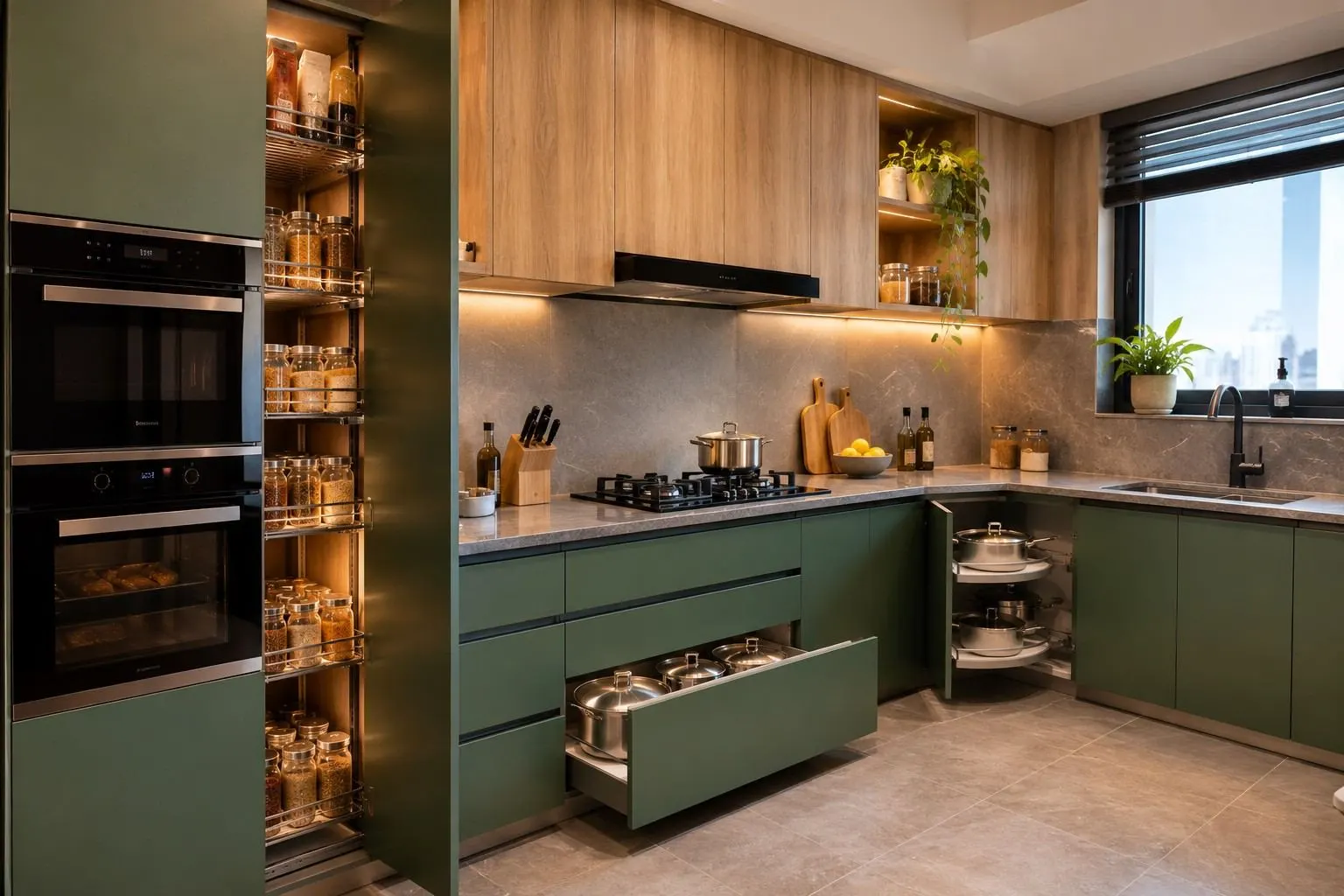
Modern kitchen design is becoming increasingly focused on efficient organisation and everyday usability.
For Indian households, kitchen planning often has to accommodate multiple utensils, appliances, dry ingredients, cookware, and different cooking activities.
A kitchen may look impressive in a 3D render, but if frequently used items are difficult to access or the workspace is poorly planned, its design has failed to solve an important problem.
What Features Will Matter in Modular Kitchen Design in 2027?
Modular kitchen design in 2027 is likely to continue prioritising practical storage, efficient work zones, durable materials, accessible cabinetry, and integrated appliances. The ideal layout depends on the kitchen's dimensions, the household's cooking habits, ventilation requirements, and available budget rather than on a single fashionable design style.
Important design considerations include:
- Efficient preparation, cooking, and cleaning zones.
- Storage that is accessible and easy to maintain.
- Suitable countertop materials.
- Safe electrical and appliance placement.
- Adequate task lighting.
- Appropriate ventilation.
- Sufficient movement space.
What interior design students can learn: Kitchen ergonomics, cabinetry detailing, technical drawings, material specifications, and installation coordination.
11. Wellness-Focused and Human-Centred Interior Design
A good interior should support the people using it.
Wellness-focused design considers aspects of a space that affect everyday comfort, such as lighting, ventilation, acoustics, privacy, accessibility, and material quality.
For example, a bedroom with attractive furniture may still be uncomfortable if street noise enters easily or excessive sunlight makes it difficult to rest.
Similarly, a home office may look stylish but become tiring to use if the desk height, seating, or screen position is unsuitable.
Human-centred design starts by understanding these practical needs.
Important considerations include:
- Comfortable and appropriate lighting.
- Effective ventilation.
- Acoustic privacy.
- Ergonomic furniture.
- Safer material choices.
- Accessible circulation.
- Flexible layouts for users of different ages.
Application in Indian homes: A home office can be improved with appropriate desk placement, glare control, supportive seating, and sufficient separation from household noise.
What interior design students can learn: Ergonomics, accessibility, user research, comfort standards, and the relationship between design decisions and daily activities.
12. Personalised Interiors That Reflect Individual Lifestyles
Not every family needs the same kind of home.
One household may require a dedicated reading area. Another may prioritise a larger dining space for family gatherings. Someone who works remotely may need a quiet workstation, while another resident may need additional storage for creative hobbies.
This is why personalisation remains an important direction in interior design.
Rather than copying an interior from social media, designers should understand the people who will live in the space.
A personalised interior may include family heirlooms, custom furniture, meaningful artwork, cultural elements, or layouts developed around specific routines.
The strongest results often come from combining the client's preferences with sound design principles.
Application in Indian homes: A designer working with a multigenerational family might need to create a layout that balances privacy, shared spaces, accessibility, and personal storage requirements.
What interior design students can learn: Client communication, design briefs, user research, concept development, and presentation skills.
How Are Interior Design Trends in 2027 Different From 2026?
The difference between interior design trends in 2026 and emerging directions for 2027 is more about evolution than a complete change in style. Warm colours, natural materials, multifunctional furniture, and sustainable design are already visible in 2026. For 2027, these ideas are expected to become more integrated, personalised, and focused on long-term comfort and usability.
These shifts should not be treated as strict rules. A design trend may remain relevant for several years, and the most suitable solution will always depend on the project.
How Can Interior Design Trends Be Applied to Different Indian Homes?
The best way to apply interior design trends in India is to adapt them to the home's size, climate, occupants, and daily routines. A compact city apartment may benefit most from multifunctional furniture, while a larger independent house may offer more opportunities for indoor-outdoor connections and custom layouts.
For interior designers, the challenge is not simply identifying what is trending. It is knowing when a particular approach is suitable for the client.
A design that works beautifully in a large bungalow may not work in a compact apartment without considerable modification.
Which Interior Design Trends Are Worth Investing in Beyond 2027?
Interior design trends worth investing in beyond 2027 are those that improve functionality, comfort, durability, and adaptability. Efficient layouts, accessible storage, appropriate lighting, quality materials, and good ventilation generally offer longer-lasting value than expensive decorative features chosen only because they are temporarily popular.
A practical way to evaluate design decisions is to separate permanent features from easily changeable elements.
For example, selecting the correct kitchen layout is more important than choosing the year's most fashionable cabinet colour.
The layout may remain in use for many years, while colours and accessories can be updated more easily.
A successful interior balances current design preferences with decisions that continue to serve the users over time.
How Can Interior Design Students Prepare for the Trends of 2027?
Interior design students can prepare for 2027 by strengthening their understanding of design fundamentals, developing technical software skills, researching materials, and learning to solve real space-planning problems. While trends provide creative inspiration, professional practice requires the ability to translate ideas into functional layouts, accurate drawings, suitable material choices, and clear presentations.
The following skills are particularly relevant:
From Trends to Practice: A Student Design Example
Imagine an interior design student receives a project brief:
Design a compact 2BHK apartment for a young family that needs a home office, additional storage, and a comfortable living area.
Rather than immediately selecting furniture, the student begins by understanding the family's routines, available space, and project requirements.
The design process might involve:
Step 1: Understanding the brief
Identify the family's storage needs, working hours, preferred style, and functional priorities.
Step 2: Creating a mood board
Develop a warm minimalist concept using neutral colours, natural textures, and selected Indian craft elements.
Step 3: Planning the layout
Prepare a floor plan that allows comfortable movement and includes a flexible study area.
Step 4: Developing a 3D model
Use software such as SketchUp to visualise the furniture arrangement, storage solutions, and overall spatial experience.
Step 5: Selecting materials and lighting
Compare practical material options and plan appropriate lighting for different activities.
Step 6: Presenting the design
Prepare drawings, material samples, mood boards, and 3D views to communicate the proposed solution.
This process shows why understanding interior design trends is useful, but mastering design principles and technical skills is equally important.
Learning Interior Design at Amor Design Institute
For students interested in building a career in interior design, learning how to transform creative ideas into workable designs is an essential part of professional preparation.
At Amor Design Institute, Ahmedabad, students can explore interior design through structured learning that combines creative development with technical skills, including design concepts, space planning, and software such as AutoCAD and SketchUp.
Developing these abilities helps aspiring designers understand not only how an interior should look, but also how it can be planned, visualised, and presented.
Students interested in pursuing formal training can explore the Interior Design Course at Amor Design Institute to learn more about the available programmes.
What Career Opportunities Could Emerging Interior Design Trends Create?
Emerging interior design trends could broaden the types of projects and specialisations that designers work on, particularly in sustainable interiors, residential space planning, furniture design, lighting coordination, and technology-enabled spaces. However, career opportunities will depend on practical ability, project experience, local demand, and professional expertise rather than trends alone.
Some related career paths include:
For aspiring designers, developing a portfolio that demonstrates original thinking, technical accuracy, and practical problem-solving may be more valuable than simply following the latest visual styles.
Frequently Asked Questions About Interior Design Trends 2027
1. What Are the Biggest Interior Design Trends for 2027 in India?
The biggest interior design trends for 2027 in India include warm minimalism, sustainable materials, smart-home technology, multifunctional furniture, biophilic design, contemporary Indian craftsmanship, and layered lighting. These directions reflect a greater focus on creating comfortable, adaptable, and visually appealing interiors suited to modern Indian lifestyles.
2. Which Colours Will Be Popular in Interior Design in 2027?
Warm beige, terracotta, muted green, chocolate brown, and nature-inspired neutrals are among the colours expected to influence interior design in 2027. AkzoNobel has also selected Soulful Sage, a soft silvery green, as its 2027 Colour of the Year. Actual choices should depend on lighting, room dimensions, materials, and personal preferences.
3. Is Sustainable Interior Design Becoming More Important in India?
Sustainable interior design is receiving increasing attention as designers explore durable products, responsible sourcing, reuse, and lower-emission materials. It involves more than using bamboo or natural-looking furniture. A genuinely responsible approach also considers material lifespan, maintenance, energy use, repairability, and the environmental impact of construction and replacement.
4. How Is Smart Technology Changing Modern Interior Design?
Smart technology is influencing interior design through automated lighting, connected devices, motorised curtains, and integrated controls. Designers must consider electrical planning, device placement, maintenance, and how technology interacts with the interior layout. The goal is to improve convenience and functionality without making the space unnecessarily complicated.
5. Which Interior Design Trends Are Best for Small Indian Homes?
Multifunctional furniture, built-in storage, warm minimalism, appropriate lighting, and flexible layouts are particularly suitable for small Indian homes. These approaches can help maximise available space while maintaining comfort. However, furniture dimensions, circulation, storage needs, and the household's daily activities should guide decisions more than any particular trend.
6. What Skills Should Interior Design Students Learn for 2027?
Interior design students should focus on space planning, colour theory, material knowledge, AutoCAD, SketchUp, furniture design, lighting, and client communication. Understanding sustainable design and technology integration can also be valuable. Strong technical skills, creative thinking, and practical project experience help students translate emerging design ideas into workable spaces.
Conclusion: The Future of Interior Design Is About Designing for People
Interior design in 2027 is not defined by one particular colour, furniture style, or decorative trend.
Instead, the most meaningful direction is towards spaces that respond to how people actually live.
Warm materials can make homes feel more inviting. Intelligent layouts can help compact apartments function better. Sustainable choices can encourage longer-lasting interiors. Technology can improve convenience, while traditional Indian craftsmanship can bring individuality and cultural meaning to contemporary spaces.
For aspiring interior designers, these trends are more than sources of inspiration. They highlight the importance of learning how to balance aesthetics with functionality, technical knowledge, and human needs.
The future of interior design belongs to those who can understand a space, recognise its challenges, and develop thoughtful solutions.
Interested in turning your creativity into an interior design career?
Explore the Interior Design Courses at Amor Design Institute, Ahmedabad, and learn how design concepts, technical tools, and practical skills come together in professional interior design.