You've finished 12th, you like the idea of designing spaces, and now you're stuck. Open any search page and you'll find "certificates," "diplomas," "advanced diplomas," "B.Des degrees" and a dozen institutes in Ahmedabad INIFD, INSD, CEPT, BRDS, Amor and more all showing similar-looking course pages, similar promises and wildly different fees.
The confusing part isn't finding a course. It's knowing which one actually fits your career goal, your budget, how much time you can give, and how you like to learn.
This guide won't just list courses. It will help you make the decision. By the end you'll know which level of course suits your goal, how to judge whether an institute is worth its fee, the mistakes most students make, and exactly what to do next.
First, understand the two decisions you're really making
Choosing an interior design course after 12th is not one decision. It's two, and students often mix them up:
- Which level of course? Certificate, diploma, advanced diploma, or a full B.Des degree.
- Which institute? Two institutes can offer the "same" 2-year diploma and deliver completely different values.
Get the first decision wrong and you either overspend on years you didn't need or underspend and miss the depth you wanted. Get the second wrong and you pay for a certificate with no software training, no site exposure and a portfolio too thin to get you hired.
We'll take them one at a time.
Does your 12th stream matter for interior design?
Quick answer: No for most courses, your stream does not matter. You can join interior design after Science, Commerce or Arts. Certificate and diploma programs at private institutes in Ahmedabad generally ask only for a Class 12 pass, with no Maths or Science requirement and no strict entrance exam.
Here's why this trips people up. Interior design feels technical (you'll use software, read measurements, understand building services), so students assume they need a Science background. In practice, institutes teach you drafting, scale and construction from scratch. What you actually need is patience, spatial imagination and willingness to redo work, not a physics score.
The one exception: full B.Des degree programs at universities are stricter. They usually want Class 12 with around 50% marks, and top design colleges (like NID or CEPT-linked routes) run their own aptitude tests such as NID DAT, UCEED or UID DAT. If a university degree is your goal, check that specific institution's entrance requirement early.
Real scenario: "I've done 12th Commerce and I want to become an interior designer. Do I need to switch to a design stream first?" No. You don't need to repeat a year or change streams. A Commerce student can join a 1-year diploma or 2-year advanced diploma directly after 12th. Your commerce background is even a quiet advantage later estimation, costing and running your own studio all involve numbers and client budgets.
Certificate vs Diploma vs Degree: which one is right for you?
Quick answer: If you want to start working fast, choose a 1–2 year diploma or advanced diploma. If you want a formal university qualification and can invest four years, choose a B.Des degree. A short certificate is best only if you're testing the waters or already working.
The mistake is assuming "more years = better." More years means more depth and a recognised degree but it also means far more money and time before you earn anything. The right choice depends on your priority, not on what sounds most impressive.
Use this to match your goal to a course level:
A realistic note on diplomas vs degrees: In interior design, employers and clients care heavily about your portfolio and software skills often more than the exact name of your qualification. A strong diploma-holder with a sharp portfolio frequently gets hired ahead of a degree-holder with weak practical work. A degree does carry more weight if you later want to teach, work abroad, or pursue a master's (M.Des), which usually requires a bachelor's degree first. So the honest rule is: diploma for speed and practice, degree for formal academic weight. Both can lead to good careers.
(For a full breakdown of course levels, durations and fee ranges in Ahmedabad, Amor's Interior Design Course fees and duration guide is a useful reference.)
How to choose the right interior design institute in Ahmedabad
Once you know the level, the institute is where most of your money and outcome is decided. Two "diplomas" at the same price can differ enormously. Here's what actually separates a good interior design institute in Ahmedabad from an average one.
Check these seven things before you pay:
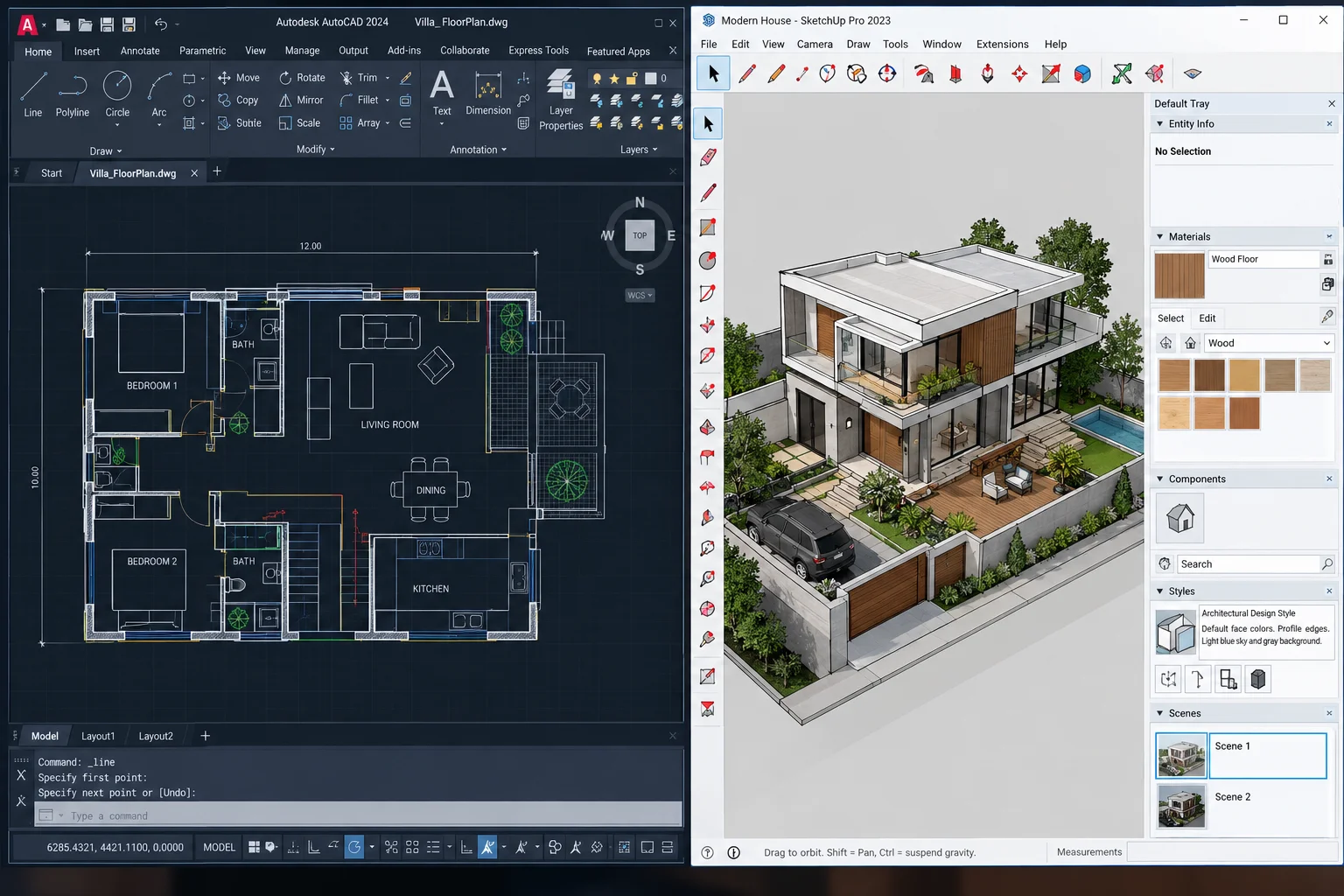
- Software training is included and hands-on. You need AutoCAD (2D) for technical drawings and SketchUp (3D) for visualisation at a minimum. Ask: "Is software taught in-house, on computers, as part of the fee or is it extra?"
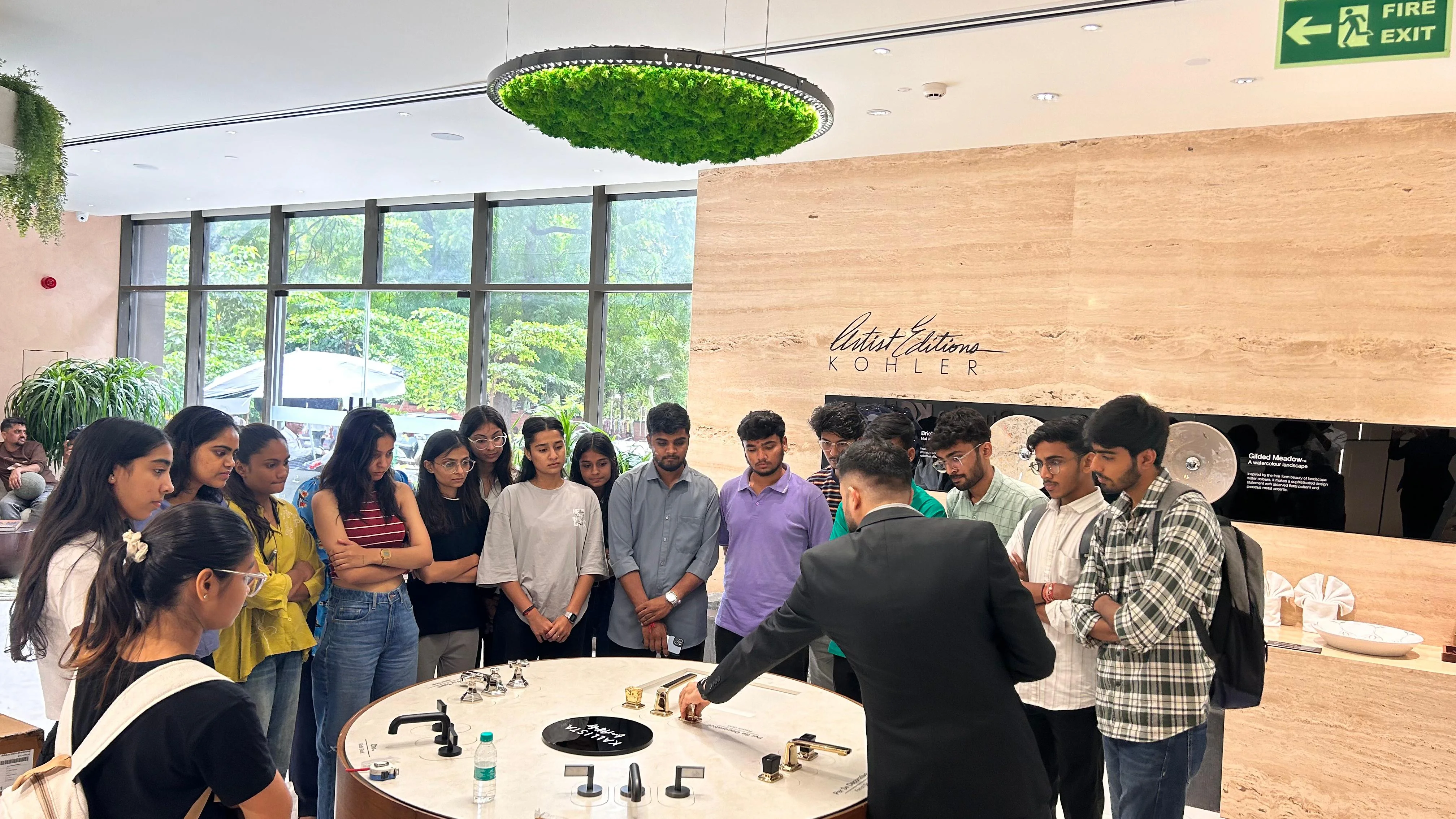
- Real site visits and live projects. Design on paper is not enough. Visiting actual construction sites, meeting contractors and vendors, and seeing how a drawing becomes a built space is what makes you employable. Ask how often site visits happen.
- Faculty with real industry or top-institute background. Teachers who are alumni of NIFT, CEPT or NID and have handled real projects teach very differently from teachers reading slides.
- A portfolio you'll leave with. Your portfolio is your interview. Ask to see the portfolios past students built, and whether the course includes portfolio mentoring.
- Student exhibitions or showcases. Institutes that make students design and display real furniture, lighting and spatial models give you something concrete to show and real presentation experience.
- Batch size. Smaller batches mean your drawings actually get reviewed. In a crowded batch, feedback disappears.
- What "placement assistance" really means. Almost every institute advertises placement support. Ask the specific question: "Placement assistance meaning what exactly do you share openings, arrange interviews, or guarantee a job?" No honest institute guarantees a job; be cautious of any that claim to. What you want is genuine industry connections and interview support.
Questions to ask on your campus visit (take these with you):
- Can I sit in on a class before I enrol?
- Which software is taught, and is it included in the fee?
- How many site visits and live projects are there per year?
- Can I see two or three real student portfolios from last year?
- Who teaches, and what's their background?
- What is the total cost including software, materials, exam or certificate fees?
- What does your placement assistance actually involve?
If an institute hesitates on any of these, that hesitation is your answer.
Mistakes students make when choosing (and how to avoid them)
- Choosing the lowest fee alone. A cheap certificate with no software, no site visits and a thin portfolio can cost you more in lost time than a fairly priced diploma. Compare value, not just price.
- Choosing on advertising alone. A big brand or heavy Instagram presence doesn't mean better teaching. Visit, sit in a class, see the portfolios.
- Assuming a degree is always better than a diploma. As explained above, in this field the portfolio often matters more. Choose the level that fits your goal, not the one that sounds grandest.
- Ignoring software and site exposure. These are the two things that get you hired. If they're missing or "extra," that's a red flag.
- Believing "100% placement" as a job guarantee. Read it carefully, placement assistance means help finding a job, not a guaranteed one. Ask what it actually includes.
- Not confirming the total cost. The advertised fee sometimes excludes software, materials or certification. Always ask for the all-inclusive number in writing.
- Not visiting in person. A course page can look identical to ten others. One campus visit tells you more than a week of browsing.
The realistic career and money picture
You should know what you're investing toward before you pay. Here's the honest version.
The demand is genuinely growing. India's interior design market was valued at roughly <cite index="3-1,12-1">USD 36.89 billion in 2025 and is projected to keep growing at around 8% a year through the early 2030s</cite>, driven by expanding residential and commercial construction. Ahmedabad, as one of India's fast-growing real estate and construction hubs, has steady demand for designers across homes, offices, retail and hospitality.
Where the work is. After an interior design course you can move into residential design, commercial and office interiors, retail and showroom design, hospitality (hotels, cafés, spas), furniture design, 3D visualisation, exhibition and set design, or start your own studio. Many designers freelance alongside a job.
On salary read this as a range, not a promise. Public salary platforms such as AmbitionBox, Glassdoor, PayScale and Indeed generally place fresher interior designers in India in the ₹2.5–4.5 lakh per year band, with earnings rising meaningfully after 4–5 years of experience, and experienced designers or studio owners earning considerably more. These are broad market figures, not guarantees your actual pay depends on your city, portfolio, skills and whether you freelance. Treat any institute quoting exact "package" figures with healthy skepticism.
A simple way to decide (step-by-step)
If you're still torn, work through this in order:
- Name your goal. Job in 1–2 years? Formal degree? Testing the field? Career change while working? Your answer picks your level (use the table above).
- Set your real budget including software, materials and certificate fees, not just tuition.
- Shortlist 3 institutes in Ahmedabad at that level.
- Visit all three. Take the campus-visit questions above.
- Compare on value, not price: software included, site visits, faculty, portfolios, batch size, exhibition, honest placement support.
- Ask for the all-inclusive fee in writing from your top two.
- Choose the one whose past student work you'd be proud to have made. That's the clearest signal of what you'll leave with.
Where Amor Design Institute fits
.webp)
If your priority is a practical, job-ready diploma rather than a four-year degree, Amor Design Institute in Vastrapur is worth shortlisting and visiting. Based on its published information, here's what's relevant to your decision check current details directly with the institute:
- Practical, diploma-first structure: a 1-year Diploma and a 2-year Advanced Diploma in interior design, built around AutoCAD, SketchUp, live site visits, model making, internship and portfolio development the exact things that make you employable.
- Faculty background: teachers who are NIFT and CEPT alumni with real project experience.
- A real showcase: students present original furniture, lighting and spatial models at Amor Rasa, an annual exhibition with nine themed divisions, genuine portfolio and presentation experience.
- International certificate: since 2023, Amor collaborates with Istituto di Moda Burgo (IMB), Milan (founded 1961), and interior design students receive an IMB diploma certificate alongside their Amor certification.
- Practical fit: small batches, flexible timing (roughly 9 AM–6 PM, Mon–Fri) suited to career-changers and working students, no entrance exam for diploma and certificate programs, and placement assistance on course completion.
Fees are published in approximate ranges (the 1-year Diploma around ₹65,000–₹1,15,000 and the 2-year Advanced Diploma in the ~₹1.3–1.8 lakh region depending on the program) always confirm the current, all-inclusive figure before enrolling. You can reach Amor at +91 90236 55176 or www.amordesign.org.
The point isn't that Amor is automatically "the best" ; no institute is right for everyone. It's that it checks the boxes that matter for a practical diploma. Visit it, visit two others, and compare using the checklist above.
Frequently Asked Questions
Can I do an interior design course after 12th from any stream?
Yes. Certificate and diploma courses in Ahmedabad generally accept a Class 12 pass from any stream Science, Commerce or Arts with no Maths or Science requirement. Only 4-year B.Des degrees have stricter marks and entrance-test requirements.
Is a diploma or a degree better for interior design?
It depends on your goal. A diploma gets you into the industry faster with practical, portfolio-focused skills. A degree gives a formal university qualification that helps if you want to teach, study further (M.Des) or work abroad. In hiring, a strong portfolio often matters more than the qualification's name.
Do I need an entrance exam for interior design in Ahmedabad?
Not for most private institutes' diploma and certificate courses they usually admit students directly. University degree programs (CEPT, NID-linked routes) do conduct entrance/aptitude tests such as NID DAT or UCEED.
How long does it take to become an interior designer after 12th?
A certificate takes about 6–12 months, a diploma 1–2 years, and a B.Des degree 4 years. Most students who want to start working sooner choose a 1–2 year diploma or advanced diploma.
Which software should an interior design course teach?
At minimum, AutoCAD for 2D technical drawings and SketchUp for 3D visualisation. Stronger programs may add rendering and image-editing tools. If software isn't clearly included in the fee, ask before enrolling.
How much do interior design courses cost in Ahmedabad?
Broadly, from around ₹43,000 for a certificate up to ₹3–4 lakh+ for a 4-year degree, depending on the institute and whether international certification is included. Always confirm the all-inclusive fee (software, materials, certificate) in writing.
Is interior design a good career choice in 2026?
The demand outlook is positive. India's interior design market is large and growing at roughly 8% a year, and Ahmedabad's active real estate sector supports steady work. That said, income depends heavily on your skills, portfolio and effort, so treat it as a field with real opportunity rather than guaranteed success.
The bottom line and your next step
Choosing an interior design course after 12th in Ahmedabad comes down to two clear moves: pick the level that matches your goal (diploma for speed and practice, degree for formal academic weight), then pick the institute on value, not price software, site visits, faculty, portfolios and honest placement support.
Your next step this week: shortlist three institutes at your chosen level, book a campus visit at each, and take the seven questions from this guide with you. Sit in on a class, see real student portfolios, and get the all-inclusive fee in writing. The institute whose student work you'd be genuinely proud to have made is usually the right one for you.