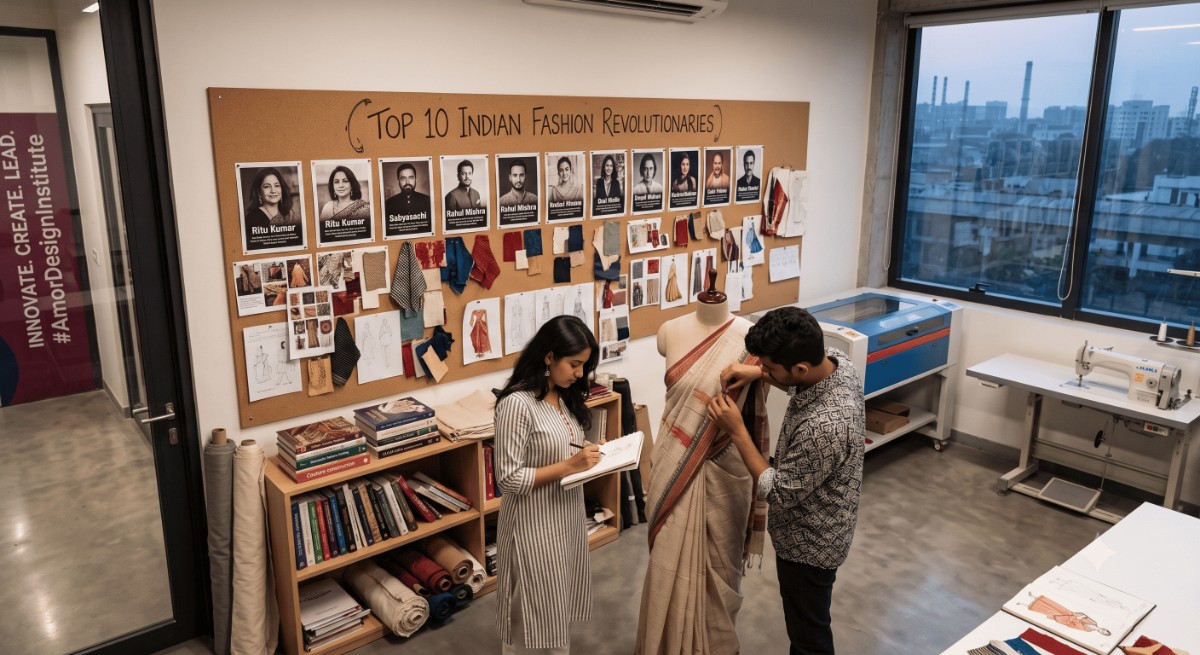
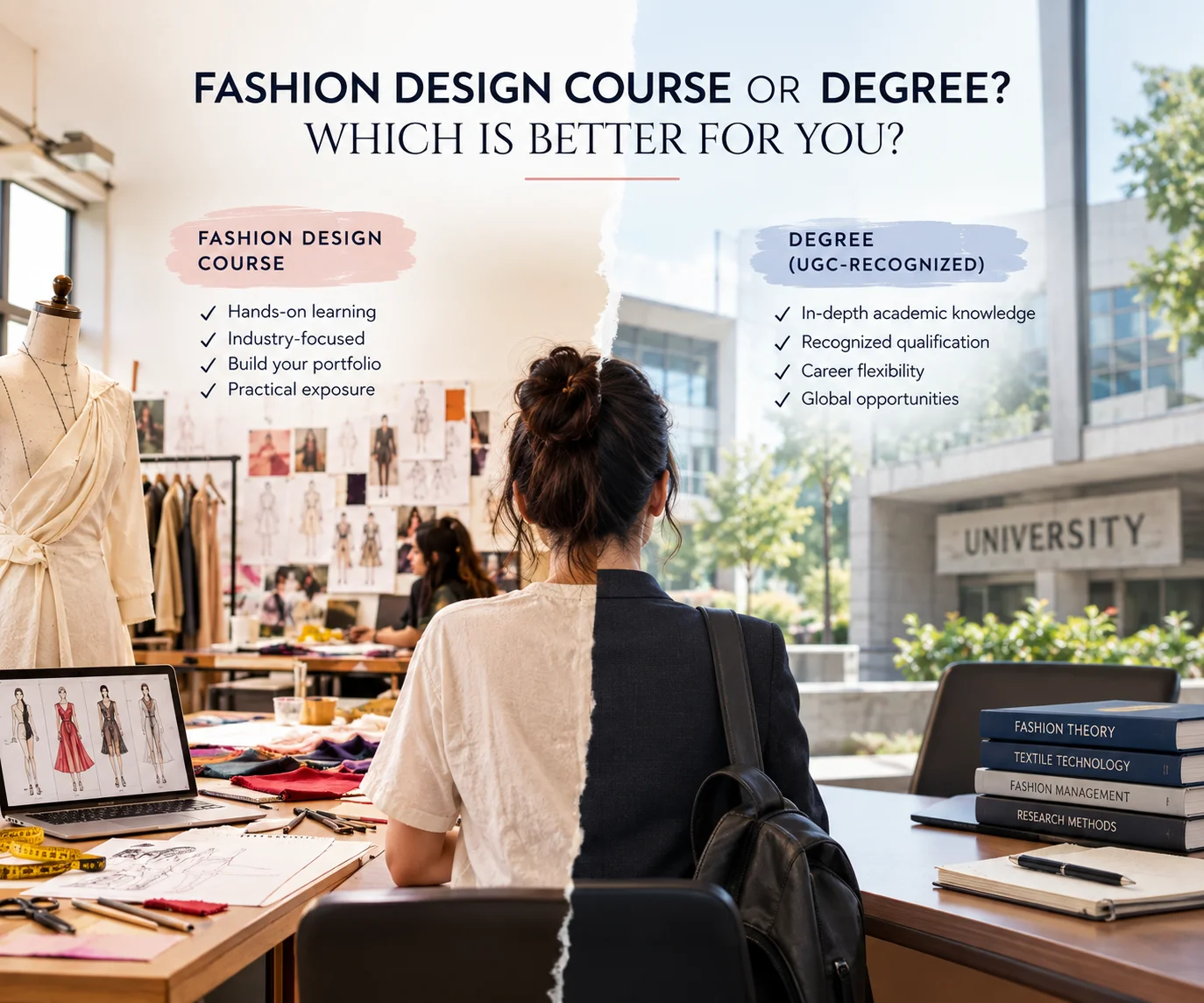
Here's something worth sitting with for a moment: the single most powerful fashion education tool available to a student in Ahmedabad right now costs nothing and fits in a pocket.
That's not an exaggeration. A fashion student in 2026 has direct access, in real time, to runway footage from Milan and Paris, behind-the-scenes content from working designers, tutorials from pattern makers, fabric sourcing communities, and client acquisition strategies. None of that existed fifteen years ago. All of it is available now, continuously, on the same platforms most people use to scroll past memes.
The question isn't whether social media is changing how fashion designers are made, it is, demonstrably and profoundly. The question is how it's changing them, what it does well, where it falls short, and what it means for someone trying to build a serious career in fashion today.
What Social Media Has Actually Changed for Designers
Before getting into the nuances, it's worth being clear about the scale of the shift that has happened across the industry.
- The gatekeepers have lost their monopoly. For most of fashion's history, the path to being seen ran through a small number of institutions: major fashion weeks, trade press, and department store buyers. Social media broke that logic. A designer in Ahmedabad with a strong aesthetic and genuine craft can now build a direct audience of 50,000 people who care about their work without ever passing through a traditional gatekeeper.
- The pace of trend propagation has compressed. A silhouette that appears on a runway in Milan used to take months to filter into consumer awareness. Now, it hits Instagram within hours, gets riffed on by creators within days, and shows up in production pipelines within weeks.
- The definition of a "fashion designer" has expanded. Social media has created entirely new design careers from content creators monetizing their taste as a brand to independent designers serving highly niche communities at premium prices.
Platform by Platform: The Digital Toolkit
Different platforms impact the industry in unique ways. Treating "social media" as a monolith ignores how specific algorithms shape design behavior.
Instagram: The Visual Portfolio
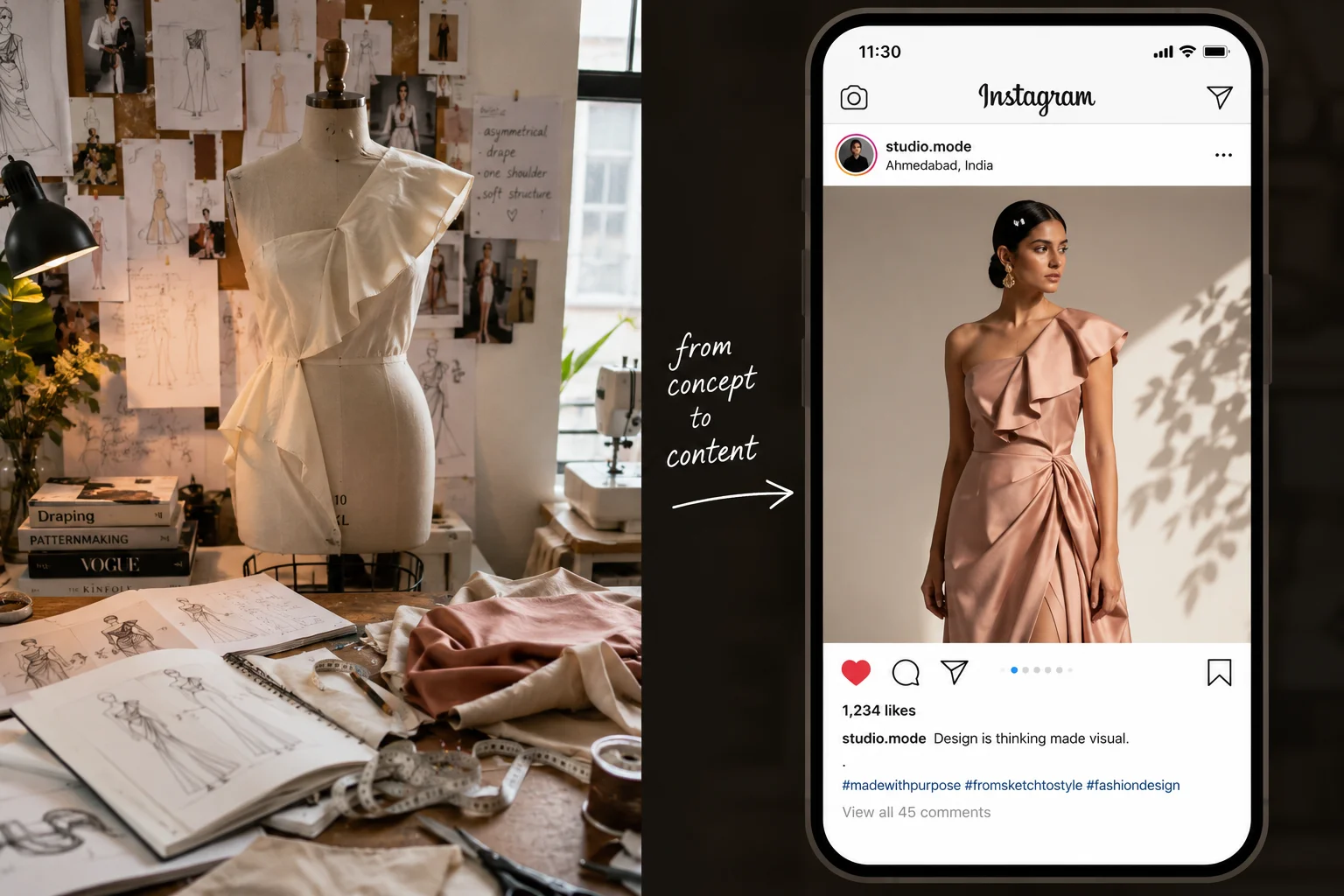
Instagram changed what a fashion portfolio means. It is a live, dynamic ecosystem where every piece of work you post is simultaneously a portfolio piece, a brand-building exercise, and a potential commercial transaction. For fashion students, a coherent, well-presented feed developed during your studies is a powerful career asset.
Pinterest: The Trend Intelligence Engine
While Instagram algorithmically rewards recency, Pinterest surfaces content based on persistent visual interest and search relevance. Serious designers use Pinterest not just as a mood board, but as a continuous read on where visual culture is moving, tracking emerging color preferences and silhouette directions in aggregate.
YouTube: Accessible Technical Education
YouTube has made technical knowledge broadly accessible. Students can find detailed walkthroughs from working pattern makers and textile specialists. However, it is a double-edged sword: YouTube is an excellent supplement, but a poor replacement for structured education with live expert critique.
Short-Form Video (Reels & Shorts): The Trend Accelerator
Short-form video is the dominant mechanism for aesthetic trend propagation. For designers, this creates the opportunity to participate in cultural conversations in real time, but it also applies immense pressure. Relevance has a half-life measured in weeks, making it harder to carve out time for deep, lasting design development.
The Double-Edged Sword of Digital Learning
The algorithmic environment that teaches students valuable visual literacy also rewards conformity. Content that resonates with established aesthetic trends inherently performs better than content that challenges them.
Designers who develop their aesthetic instincts entirely through social media feedback risk calibrating their eye to what already exists rather than what hasn't been made yet. Building an original design voice requires resisting the pull of immediate engagement, a skill that serious fashion educators emphasize heavily in 2026.
The New Career Paths in Fashion
Social media has enabled entirely new business models. However, the difference between people who build sustainable careers and those who simply build followings is craft and business knowledge.
The Local Picture: Fashion, Social Media, and Gujarat
The intersection of digital media and fashion looks distinct in Gujarat, driven by unique market forces and deeply rooted traditions.
The D2C Ecosystem
Gujarat's direct-to-consumer (D2C) fashion ecosystemselling through Instagram, Myntra, and WhatsAppis booming. Brands leverage Gujarat's robust manufacturing infrastructure to produce accessible fashion. This is a massive entrepreneurship opportunity for graduates who grasp both design and digital strategy.
The Bridal and Festive Market
Gujarat's occasion-wear market is commercially immense. Instagram and Pinterest are the primary discovery mechanisms for brides at every price point. Designers operating in this space without digital fluency are at a severe disadvantage.
Global Appetite for Heritage Craft
Content documenting Indian craft traditions detailing the techniques behind Ajrakh, Patola, Bandhani, and Kantha generates massive global engagement. Designers who authentically communicate their craft heritage are building brands with commercial value in both domestic and international markets.
FAQs: Honest Answers for Fashion Students
Q: Do I need to be a content creator to have a career in fashion?
You need to be competent with social media, but you don't necessarily need to be an influencer. If you work in-house for a brand, you need digital fluency for trend research and communication. If you launch your own label, social media marketing is a non-negotiable requirement.
Q: Should I build my Instagram presence while I'm still studying?
Yes, deliberately and thoughtfully. Documenting your design process, technical development, and creative experiments builds a track record. Just ensure the quality of your actual work justifies the attention.
Q: What is more important: technical skills or social media skills?
Technical skills, by a significant margin. Social media gets you attention; technical skill and creative depth convert that attention into a sustainable career. A beautiful Instagram feed cannot hide poorly constructed garments.
Q: How do I develop an original voice when I am surrounded by social media trends?
You must intentionally manage your inputs. The most distinctive designers spend time with physical archives, raw textiles, and craft communities outside the digital bubble. They use social media as one input among many, not their primary reference point.
How Amor Design Institute Prepares You for 2026?
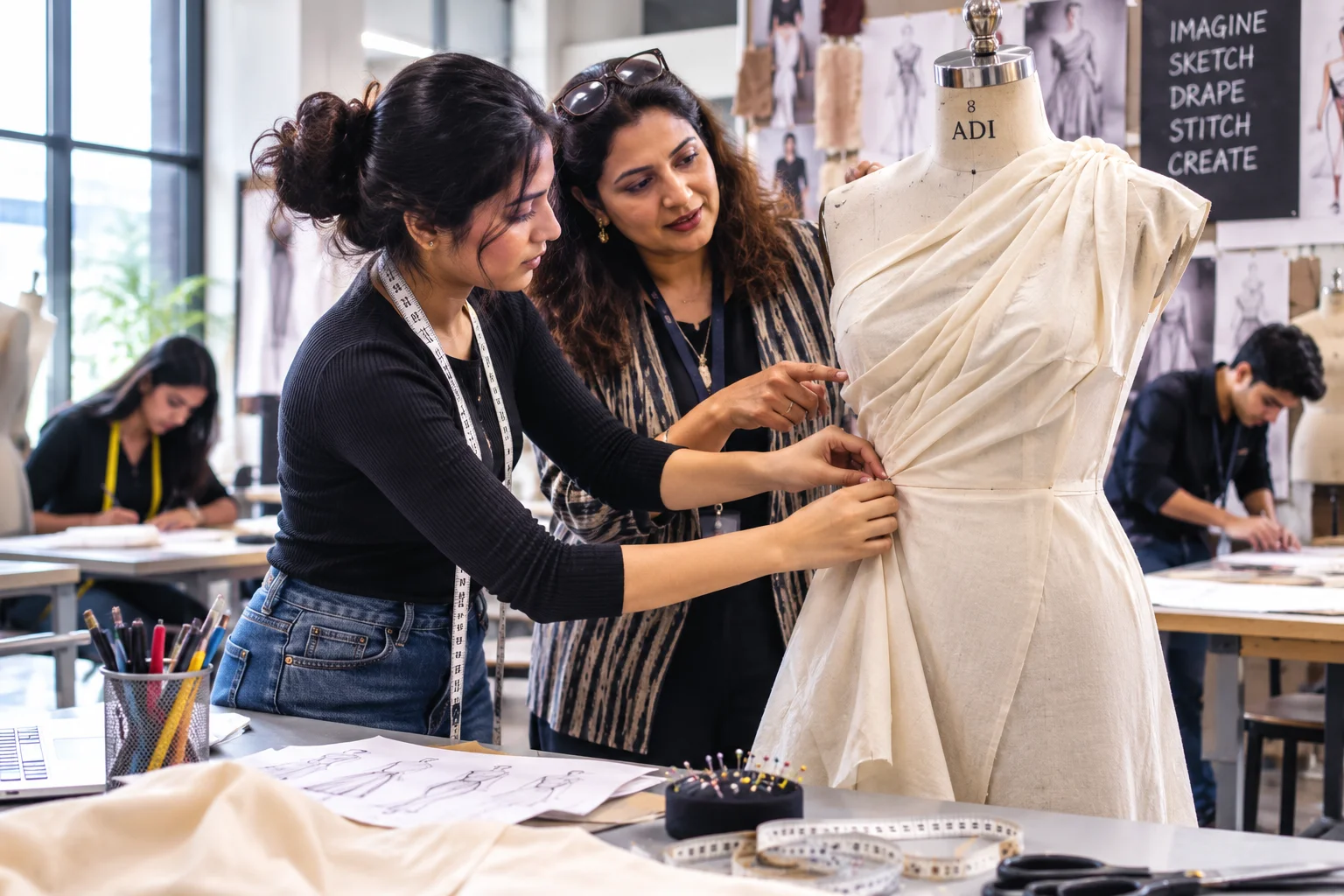
A serious fashion education must acknowledge that social media cannot replace the studio. Pattern making, draping, and fabric technology require hands-on practice, guided by an expert who can correct your physical technique in real time.
At the same time, an education that ignores digital communication is preparing students for an industry that no longer exists.
ADI's 2-year Advanced Diploma is built on this exact balance:
- Deep Craft Foundation: Intensive physical studio work in construction, draping, and pattern making.
- Commercial Literacy: Embedded modules on marketing, branding, and navigating the business side of a digital-first design career.
- Real-World Application: Showcase your work at Amor Glitzz, ADI's annual runway event, and build a high-stakes portfolio.
.jpg)
- Global Credentialing: Our partnership with Istituto di Moda Burgo (IMB Milan) provides an international perspective valued in the premium sector.
The industry needs designers who are as comfortable on a factory floor with a pattern in their hands as they are building a brand narrative for a digital audience. We train you to be both.
Admissions for 2026 are open at www.amordesign.org. Call +91 90236 55176 to find out more.