How AI Is Transforming Interior Design Decisions?
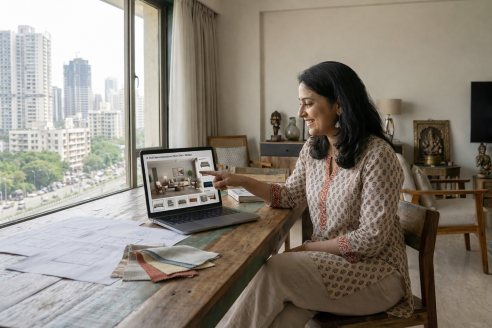
Interior design is rooted in creativity, instinct, and experience. Still, designing a space often means making some educated guesses.
Will this colour look good in natural light?
Will the sofa fit without making the room feel cramped?
Will the client actually like the outcome once everything is done?
This is where Artificial Intelligence (AI) is starting to make a real difference.
AI isn’t here to replace interior designers. Instead, it helps reduce uncertainty, speed up decision-making, and make thoughtful design easier for everyone. Whether you’re a professional, a student, or a homeowner planning your own space, AI is already changing how interiors are imagined, planned, and completed, especially in today’s busy urban life.
What Does AI Mean in Interior Design?
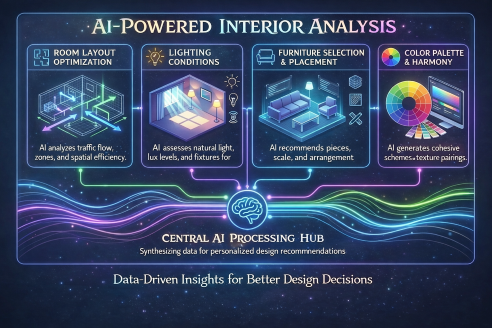
Simply put, AI in interior design means using innovative software and tools that learn from factors such as layouts, materials, user preferences, lighting, and past projects to suggest better design solutions.
Instead of starting from a blank page, designers now begin with intelligent recommendations.
AI can assist with:
- Space planning
- Furniture placement
- Colour and material selection
- Lighting optimisation
- Budget forecasting
You can think of AI as a design assistant that works all the time, keeps learning, and always remembers what has worked well in the past.
How AI Is Transforming the Interior Design Process?
1. Faster Space Planning with Fewer Mistakes
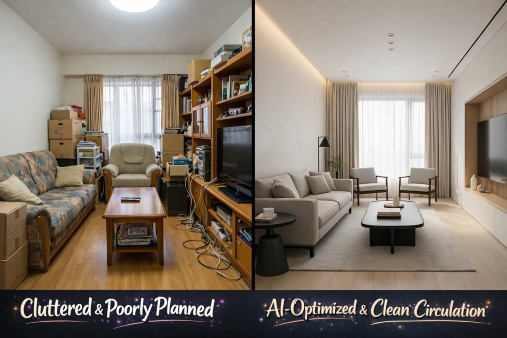
In the past, designers used hand-drawn sketches and tried different layouts until they found the right one. This took a lot of time and often meant making several changes.
With AI-powered design tools, designers can now:
- Analyse room dimensions instantly
- Suggest optimal furniture placement.
- Identify circulation and movement issues before execution.
This reduces rework and the need for expensive on-site fixes, especially in small-city homes and apartments where every inch counts.
2. Smarter Colour & Material Selection
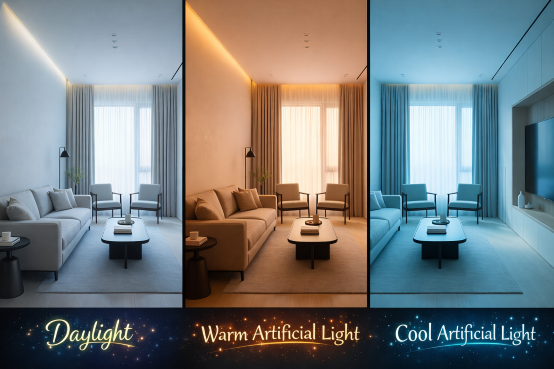
People make colour and material choices very emotionally, but AI brings logic and confidence to these choices.
AI tools can:
- Predict how colours will appear under different lighting conditions.
- Suggest material combinations based on durability and daily usage.
- Recommend palettes aligned with client preferences and lifestyle.
For example, instead of guessing how a wall colour will look in a north-facing Indian apartment, AI can show you an accurate preview before you paint anything.
3. Hyper-Personalised Designs for Clients
One of the most significant shifts we’re seeing in interior design is due to AI, which enables personalisation for many people at once.
By analysing:
- Client lifestyle
- Past preferences
- Budget constraints
- Usage patterns
AI helps designers create spaces that really match how people live, not just what looks good online or on social media.
This is especially useful for:
- Rental homes
- Small apartments
- First-time homeowners
Every day, designs are getting more practical, personal, and comfortable to live in.
4. Better Budget Planning and Cost Control
Creativity and budget don’t always go hand in hand in interior design. AI helps bring them together.
AI-based systems can:
- Estimate project expense early in the planning stage
- Suggest alternative materials or layouts when budgets exceed limits.
- Reduce material wastage through better planning.
This makes the whole design process clearer and helps build stronger trust between designers and clients.
5. AI-Generated Visuals & Virtual Walkthroughs

Many clients find it hard to picture what a finished space will look like. AI changes this completely.
With AI-assisted rendering:
- Designers can generate realistic room visuals, including images and videos, in minutes, using advanced visualisation technologies such as those developed by NVIDIA.
- Clients can experience virtual walkthroughs of their future space.
- Design approvals happen faster and with fewer revisions.
When everyone can see the same vision before work starts, people are usually much happier with the results.
Is AI Replacing Interior Designers?
Short answer: No.
AI can analyse data, spot patterns, and make predictions, but it can’t understand emotions, culture, or human behaviour as a designer can.
Interior design is still deeply about:
- Understanding people
- Interpreting emotions
- Creating comfort, identity, and belonging
AI helps creativity, but it doesn’t replace it. The best results come when human intuition and innovative technology work side by side.
How AI Is Helping Interior Design Students and New Designers?
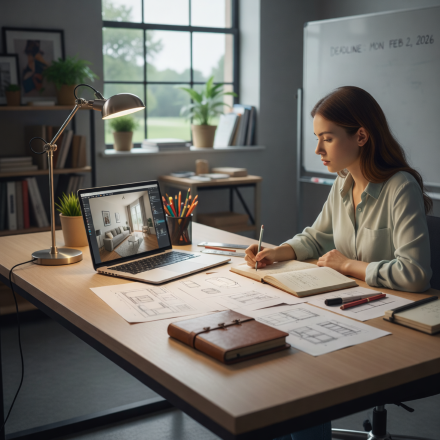
AI has become a powerful learning tool for students and beginners, A trend also highlighted in global AI education platforms like Coursera.
AI helps them:
- To explore multiple design options quickly.
- To understand proportions and spatial planning.
- To experiment without making expensive mistakes
This can give everyone a fair chance and lets young designers spend more time on ideas, storytelling, and originality rather than getting stuck on technical details.
The Future of Interior Design with AI
Looking ahead, AI is expected to:
- Predict interior design trends before they go mainstream, as explained in IBM’s overview of artificial intelligence.
- Integrate more deeply with smart homes and adaptive interiors.
- Enable real-time design changes based on user behaviour.
Homes won’t just be designed once. They’ll change and grow along with the people who live in them.

Final Thoughts
AI is not changing interior design. AI isn’t making interior design robotic. Instead, it’s making the process more thoughtful, efficient, and people-focused. The creativity they’ll gain clarity.
Only those with Human emotion, Design thinking, and Artificial intelligence will survive in interior design.
And that’s something a machine can never do by itself.
🔎 FAQs: AI in Interior Design
1. How is AI used in interior design?
AI is used for space planning, furniture placement, colour selection, budgeting, and visualisation by analysing data and suggesting more innovative design solutions.
2. Can an AI design a house completely independently?
Also, though AI could lay out and present suggestions, a certain level of creativity and understanding is required, which a machine cannot provide.
3. Is AI relevant in small apartments?
Yes. AI can also prove particularly valuable in smaller flats, as it generates layouts, optimises space use, and avoids costly design errors.
4. How does AI aid interior design students?
AI can help students find design concepts faster, better understand design proportions, conduct design experiments safely in the software they have, and focus on the creative part of the design.
5. Will AI replace Will Interior Designers in the future?
No. AI helps the designer with efficiency and decision-making, which cannot substitute the intuition and emotional qualities of a human.