Why 2026 Is the Best Time for Students to Start a Fashion Brand in India?
Not long ago, starting a fashion brand in India seemed possible only for top designers or wealthy investors. In 2026, that's no longer true.
Thanks to affordable manufacturing, social media marketing, AI design tools, and direct-to-consumer platforms, students in India are starting fashion brands from hostels, shared apartments, and even their family homes.
If you’re a student who wants to start your own clothing label, this guide will show you step by step how to launch a fashion brand in India in 2026, with honest advice about the challenges.
Can a Student Really Start a Fashion Brand in India?
Yes, and many already are.
In India, there is no legal age restriction to start a fashion brand. As a student, you can:
- Sell under your own name
- Register as a sole proprietor
- Start selling without a GST number (below the threshold)
- Build an audience before launching products
What matters more than money is clarity, consistency, and patience.
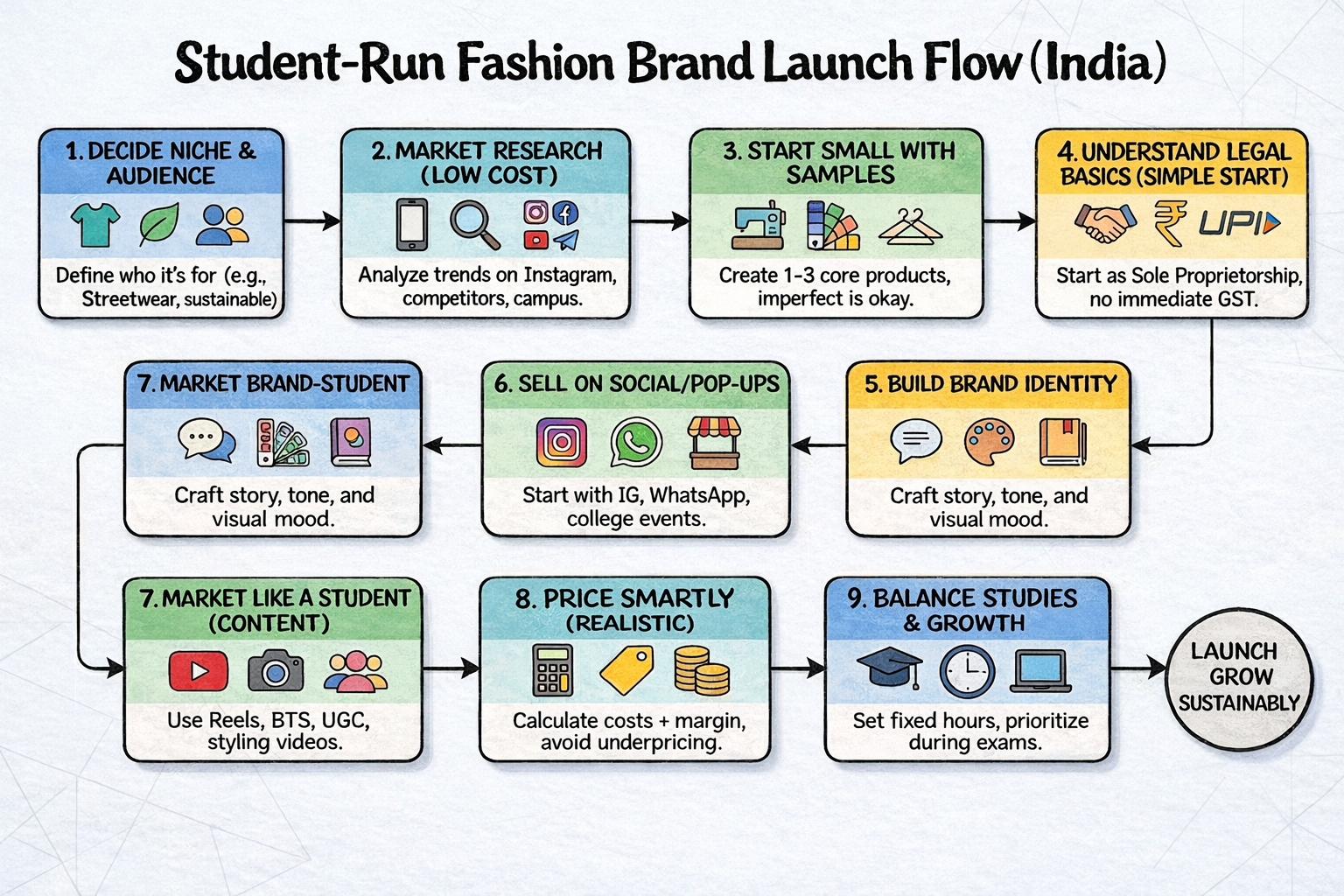
Step 1: Decide What Kind of Fashion Brand You Want to Build
Before thinking about logos or Instagram pages, answer one simple question:
Who is this brand for?
In 2026, successful student-run fashion brands in India usually fall into niches like:
- Affordable streetwear for Gen Z
- Sustainable or upcycled fashion
- Ethnic-fusion wear for college and office
- Size-inclusive or gender-neutral clothing
- Occasion wear for festivals and weddings
Step 2: Research the Market (Without Overthinking It)
You don’t need to spend a lot on tools to research fashion trends in India.
Do this instead:
- Check Instagram Reels and YouTube Shorts
- Observe what students wear on campus
- Analyse Indian fashion brands on Myntra, Ajio, and Meesho
- Read comments under competitor posts (this is gold)
Ask yourself:
- What do people complain about?
- What’s overpriced?
- What styles sell out fast?
This step helps you avoid copying others and lets you create something that matters.
Step 3: Start Small with Designs and Samples
You do NOT need 20 designs.
Start with:
- 1–3 core products
- Neutral colors
- Simple silhouettes
In India, students often source samples from:
- Local tailoring units
- Small garment manufacturers
- Fabric markets (Delhi, Mumbai, Surat, Tiruppur, Jaipur)
Let your first samples be imperfect. You’re just testing your ideas, not launching a luxury brand. This approach should make you feel more confident to take that first step without fear of perfection.
Step 4: Understand Legal Basics in India (Student-Friendly)
Here’s something most blogs don’t mention:
You don’t need complete registration on Day 1.
What you can start with:
- Selling on Instagram or WhatsApp
- Cash-based or UPI payments
- No GST (if turnover is below ₹40 lakh for goods)
When you should register:
- Brand name starts growing
- You want to sell on marketplaces
- You plan to run paid ads
At that point, register as:
- Sole Proprietorship
- Optional GST registration
This approach keeps your costs and stress low.
Step 5: Build Your Brand Identity (Not Just a Logo)
A fashion brand is more than a logo.
Think about:
- Brand story (why you started)
- Tone of voice (bold, minimal, fun, luxury)
- Visual mood (colours, textures, fonts)
In 2026, students relate more to real stories than to perfect, polished brands. Sharing your genuine journey will help your audience connect and trust your brand more deeply.
Your audience doesn’t want a brand that pretends to be big. They want honesty.
Step 6: Sell Where Indian Students Actually Buy
You don’t need a website on day one.
Start where your audience already is:
- Instagram Shop
- WhatsApp Business
- Pop-ups in colleges or flea markets
- College festivals and exhibitions
Once you validate demand, then move to:
Taking it step by step helps you avoid unnecessary risks.
Step 7: Market Like a Student (Because You Are One)
You don’t need big ad budgets.
What works in 2026:
- Behind-the-scenes Reels
- Styling videos
- Honest product reviews
- Founder-led content
- User-generated content from friends
Focus on posting regularly, not on making every post perfect.
Step 8: Price Smartly (Not Emotionally)
Many students underprice out of fear.
Instead:
- Calculate fabric + stitching + packaging
- Add a margin for mistakes
- Keep pricing realistic for your audience
Remember:
Brands that are too cheap often struggle. Brands with fair prices tend to grow.
Step 9: Balance Studies and Brand Growth
This is where most student founders struggle. It’s usually not about talent, but about burnout.
Set these things:
- Fixed weekly work hours
- Clear priorities during exams
- Small, achievable goals
- Stay consistent
You don’t have to choose between your degree and your brand. Both can work together.
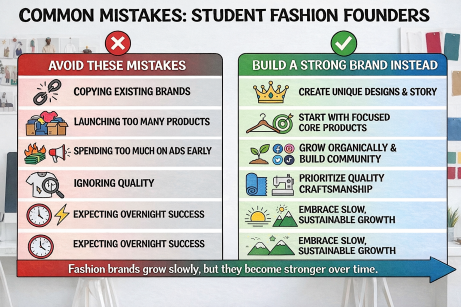
Common Mistakes Student Fashion Founders Make
Avoid these mistakes:
- Copying existing brands
- Launching too many products
- Spending too much on ads early
- Ignoring quality
- Expecting overnight success
Fashion brands grow slowly, but they become stronger over time.
Is 2026 a Good Year to Start a Fashion Brand in India?
Absolutely.
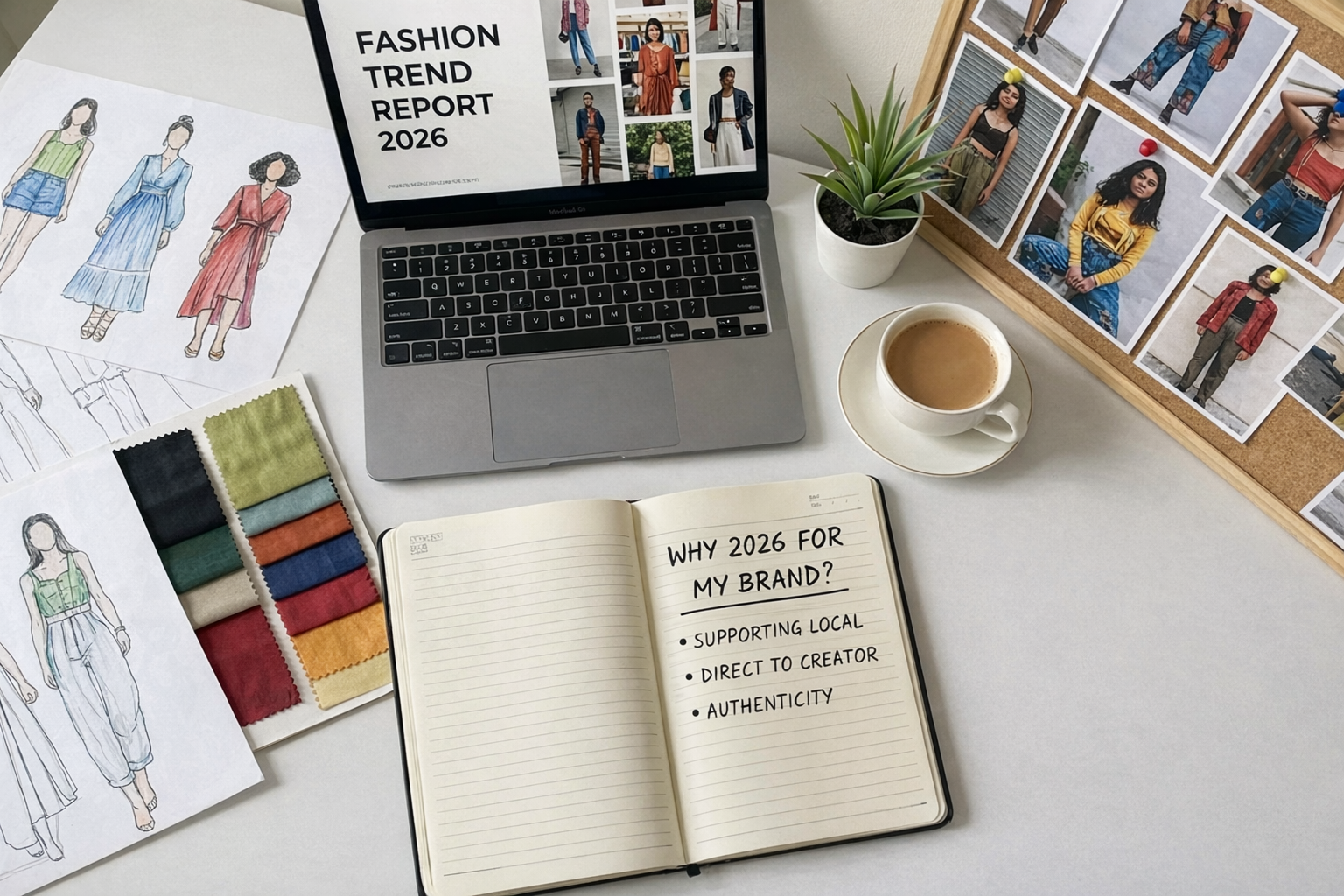
Indian consumers are:
- Supporting local brands
- Buying directly from creators
- Valuing authenticity over luxury labels
Being a student is your advantage, not a weakness. You spot trends before established brands do.
Final Thoughts
Starting a fashion brand as a student in India in 2026 isn’t about knowing everything. It’s about taking the first step, even if you don’t feel entirely ready.
You don’t need:
- A big budget
- A fashion degree
- A perfect plan
You need:
- A clear idea
- Consistent effort
- Willingness to learn
All successful Indian fashion brands began with small steps.
Yours can too.