If you have ever used the words "contemporary" and "modern" interchangeably when describing a room, you are in excellent company. Most people do, including, embarrassingly, a fair number of people who work in and around the design industry. Estate agents use them as synonyms. Home décor brands blur them deliberately. Pinterest boards mix them without apology.
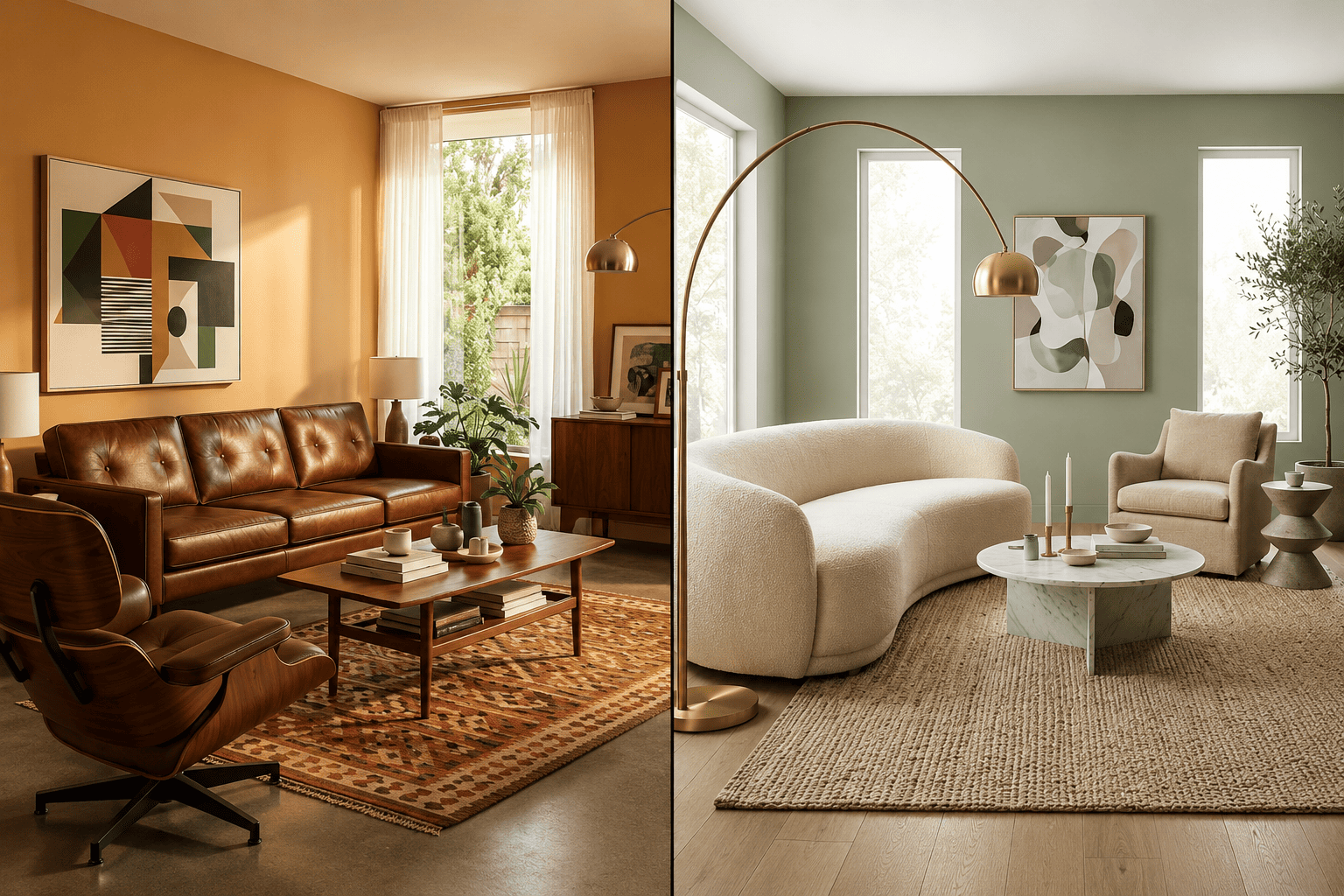
But inside a design school, an architecture studio, or a serious client brief, the two words mean distinctly different things. Getting them confused can lead to a room that feels slightly off like a sentence with the wrong word in it. Technically fine, but somehow not right.
This post will settle the confusion once and for all.
Modern Is a Period. Contemporary Is a Moment
Modern interior design refers to a specific historical design movement, one that emerged in the early-to-mid 20th century and has a defined set of characteristics rooted in that era.
Contemporary interior design style refers to what is happening in design right now this year, this season. It is a living, breathing aesthetic that shifts over time rather than referring to a fixed point in history.
The simplest way to hold this distinction: Modern is a period. Contemporary is a moment.
Both happen to share a preference for clean lines and minimal clutter, which is exactly why they get confused. But their philosophies, materials, palettes, and emotional qualities are quite different.
Understanding Modern Interior Design
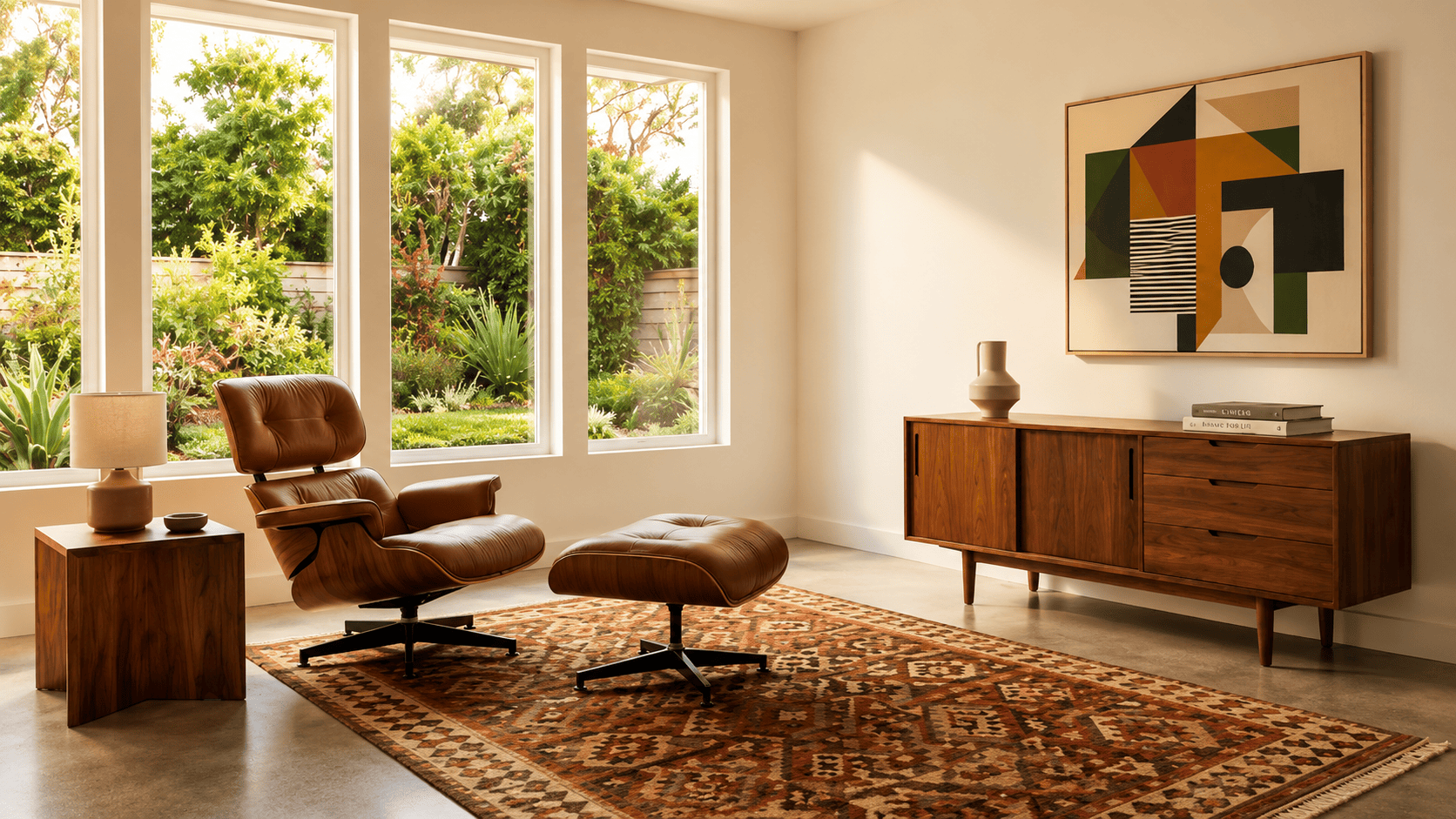
The modern design movement grew out of early 20th-century Europe particularly from the German Bauhaus school, Scandinavian functionalism, and the ideas of architects like Le Corbusier and Ludwig Mies van der Rohe. The core conviction was that design should serve function, that unnecessary ornamentation was a kind of dishonesty, and that honest materials used honestly was the highest form of aesthetic expression.
In a room, this translates to:
Form follows function. Every piece of furniture exists because it needs to. Nothing is purely decorative. A modern sofa has clean, low-profile arms because that is the most efficient use of the form, not because it looks cool.
Natural materials, visibly used. Wood grain is not hidden, it is the point. Leather is not embossed or textured to look like something else. Concrete is left exposed. Steel is polished but not disguised. The material speaks for itself.
A warm, earthy palette. Contrary to what many people assume, modern interiors are not cold. The palette runs toward warm neutrals: camel, terracotta, ochre, warm whites, teak, and walnut. These are grounded, organic tones that reflect the movement's connection to natural materials.
Horizontal lines and low profiles. Modern furniture sits close to the ground. Sofas are wide and low. Coffee tables are flat. The overall visual movement in a modern room is horizontal, creating a sense of calm and groundedness.
An absence of decoration for decoration's sake. No ornate frames, no patterned wallpaper, no decorative mouldings. If something is on the wall, it is likely a single large artwork chosen with great care.
Think of a Eames lounge chair, a Barcelona daybed, a flat-roofed house with floor-to-ceiling windows looking out onto a garden. That is the world of modern design.
Understanding Contemporary Interior Design Style
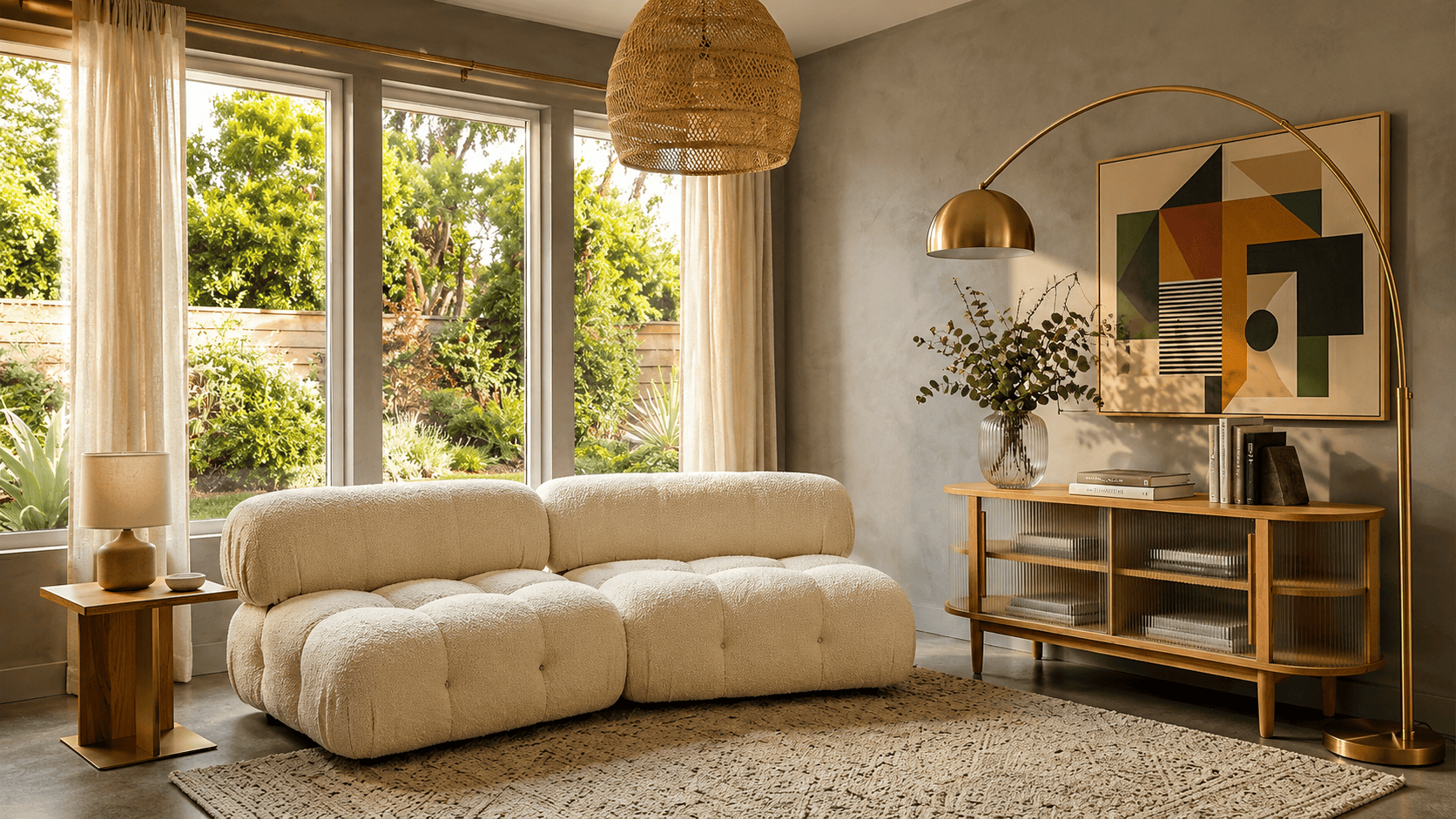
Contemporary design does not have a manifesto. It does not have founding fathers or a school of thought that defined it. That is precisely the point contemporary design is defined by its refusal to be fixed.
What is contemporary right now (and has been for the past several years) includes:
Curves and organic shapes. Where modern design is linear and horizontal, contemporary interior design style embraces curved rounded sofas, arched doorways, oval dining tables, sculptural lighting. The sharp right angle has softened.
A cool, sophisticated palette. Contemporary spaces tend toward cooler tones: warm greys, chalky whites, sage green, dusty blush, terracotta (borrowed from the modern palette, but used differently), and deep charcoal. These are colours that photograph beautifully and feel calm without feeling sparse.
Mixed and unexpected materials. Contemporary design is not precious about material purity. A room might combine brushed brass hardware, a linen sofa, a concrete floor, rattan pendant lights, and a velvet accent chair and feel entirely coherent. The skill is in the curation, not the conformity.
Texture over pattern. Where traditional interiors use pattern to add visual interest, contemporary spaces use texture. Boucle fabric, ribbed ceramics, fluted glass, limewash paint, tactile rugs. The visual complexity comes from surface quality rather than print or motif.
Intentional imperfection. Contemporary design has moved away from the machine-perfect finish. Handmade ceramics with visible throwing marks, slightly uneven limewash walls, rough-edged stone, these imperfections signal authenticity and craft in a way that hyper-polished surfaces no longer do.
Sustainability as an aesthetic choice. In truly contemporary spaces, sustainability is not a compromise; it shows up as reclaimed timber, natural linen, untreated stone, and locally sourced materials that happen to look exactly right.
The Comparison Table: Modern vs. Contemporary at a Glance
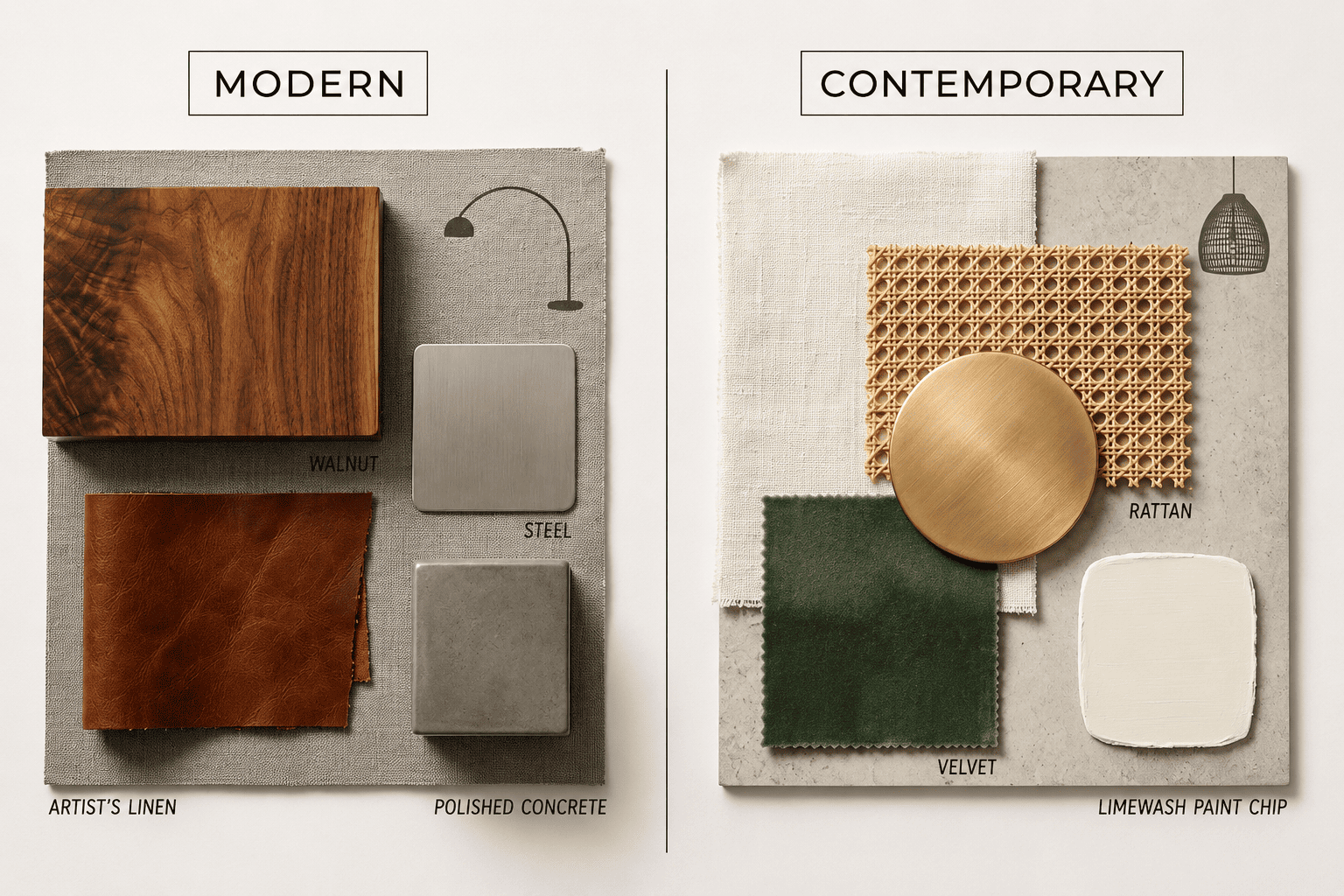
Where Modern Meets Contemporary.
The overlap between modern and contemporary design is real, and it is not accidental. Contemporary design has borrowed heavily from the modern movement particularly its preference for clean lines, quality materials, and restraint. Many contemporary spaces use mid-century modern furniture pieces alongside current textiles and lighting.
The result is a hybrid aesthetic often called "modern contemporary interior design" that most people are actually referring to when they say either word. It is the most commercially popular interior design style in the world right now, and it works because the two sensibilities complement each other naturally.
In a modern contemporary interior design scheme, you might find:
A walnut sideboard from the 1960s sitting below a contemporary arched mirror. A Mies van der Rohe Barcelona daybed paired with a current boucle accent chair. Clean architectural lines in the architecture itself, softened by curved, tactile furniture and warm contemporary lighting.
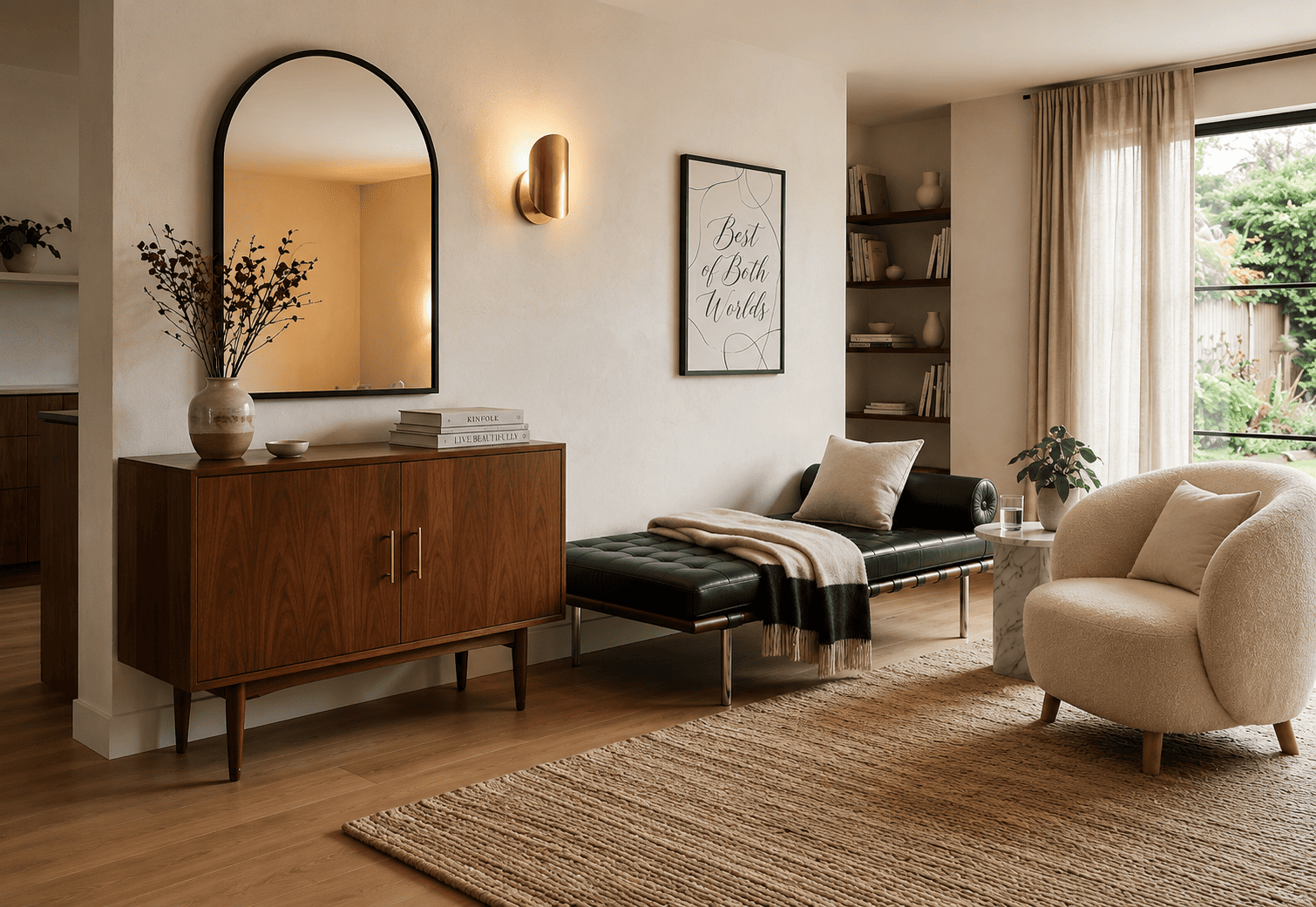
This blending is not sloppy when done with knowledge and intention, it is the most sophisticated thing a designer can do. Understanding what each style actually is makes the blending possible. Without that knowledge, you are just hoping things look good together.
🏛️ Want to Master These Design Styles Practically?
Self-study gives you vocabulary. Structured learning gives you instinct.
Understanding the difference between modern and contemporary is one thing. Knowing how to walk into an empty room, understand a client's brief, and make decisions that are both aesthetically right and commercially viable is what a proper design education develops.
Check the syllabus for Amor design Institute Gtop-rated Interior design Course in Ahmedabad and see how we teach design theory, space planning, material selection, and professional practice in a way that prepares you for real projects, not just mood boards.
How to Tell Them Apart in a Real Room
Theory is useful. But if you are standing in a room and someone asks you to identify which direction the design is pulling, here is a practical checklist:
Ask about the lines first. Are they predominantly straight and angular, or do you see curves in the furniture, in the light fixtures, in the architectural details? Curves lean contemporary. Sharp horizontals lean modern.
Look at the furniture height. Does the furniture sit low to the ground with a wide, flat profile? That is a modern signature. Is there variation in height, with some taller statement pieces? More contemporary.
Check the materials for mixing. Is every material in the room in the same family wood, leather, steel? That restraint is modern. Is there a conversation happening between completely different materials rattan next to marble next to linen? That eclecticism is contemporary.
Read the colour temperature. Warm, earthy tones with a sense of organic weight modern. Cooler, more silvery tones with carefully introduced warmth contemporary.
Find the focal point. In a modern room, the focal point is usually architecturally a fireplace, a window, the room's structure itself. In a contemporary room, the focal point is often a decorative object or a piece of art chosen to anchor the space emotionally.
What This Means If You Are Designing Your Own Space?
If you are about to redesign a room or brief an interior designer, knowing which direction you want to go will save you a significant amount of time, money, and the quiet frustration of a room that doesn't quite feel like you.
Ask yourself two questions:
Do I want my space to feel rooted, grounded, and anchored in a clear design tradition? If yes, lean toward modern. Invest in a small number of genuinely well-made pieces: a quality walnut dining table, an Eames-era chair, a leather sofa with clean arms. These pieces will not date because they already have a fixed historical identity.
Do I want my space to feel current, layered, and responsive to how I actually live right now? If yes, learn contemporary. Allow yourself to mix materials, introduce texture freely, and let the space evolve. Contemporary design is inherently more flexible because it is not trying to be faithful to a historical moment.
And if the honest answer is both welcome to modern contemporary interior design. Just make sure you understand the rules well enough to know which ones you are choosing to bend.
A Final Note on Labels
Labels in design are useful tools, not verdicts. The point of understanding what contemporary interior design style actually means versus what modern interior design actually means is not to police the way people talk about their homes. It is to give you a clearer mental model for making decisions.
The best-designed rooms are usually impossible to place in a single category. They have a point of view, a coherence, a sense that someone made choices rather than defaulted to them. Whether those choices are technically modern, technically contemporary, or a knowing blend of both matters far less than whether the room feels intentional.
That intentionality is what design education is ultimately teaching and it starts with knowing the difference between the words you use.